
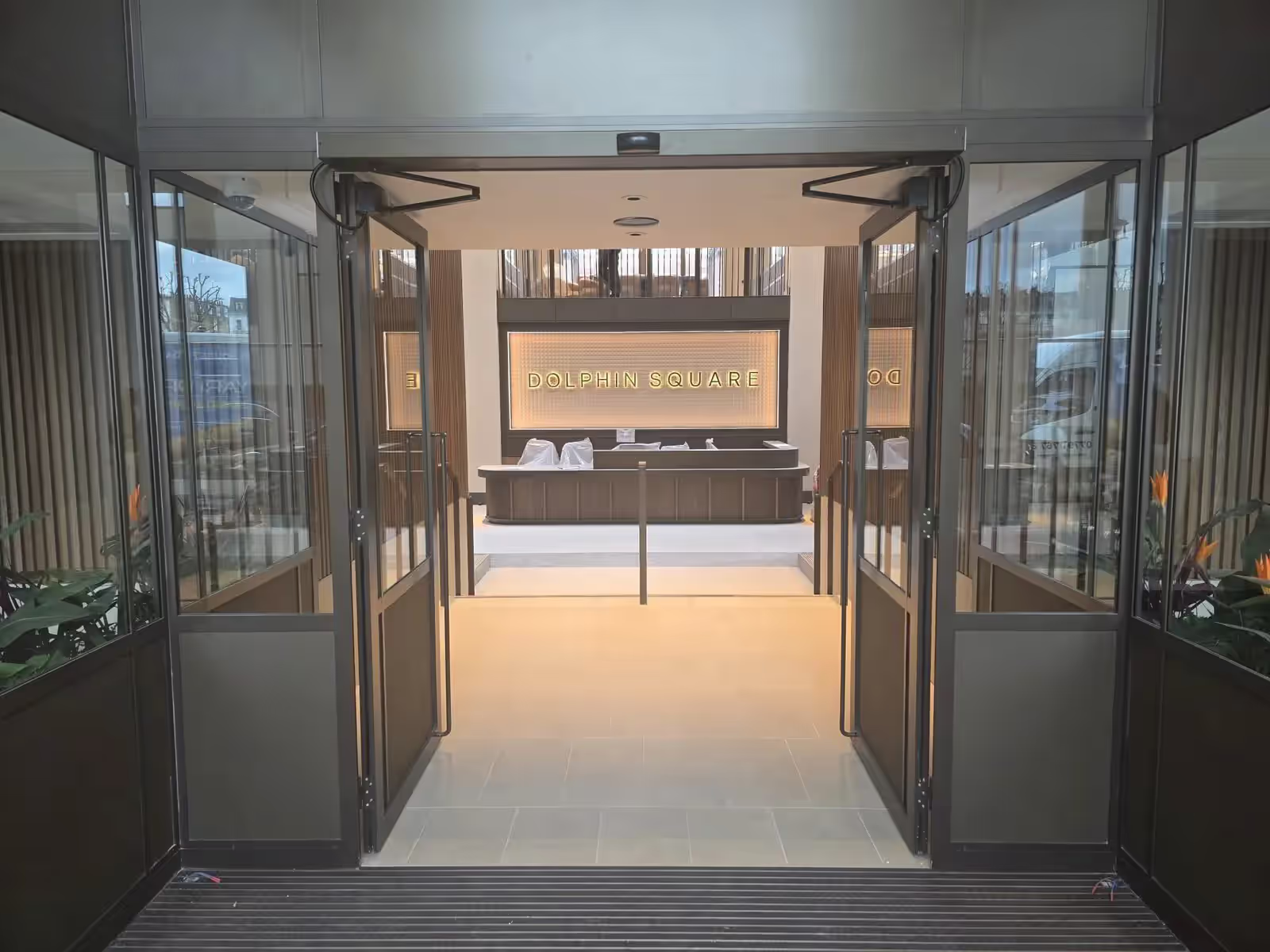
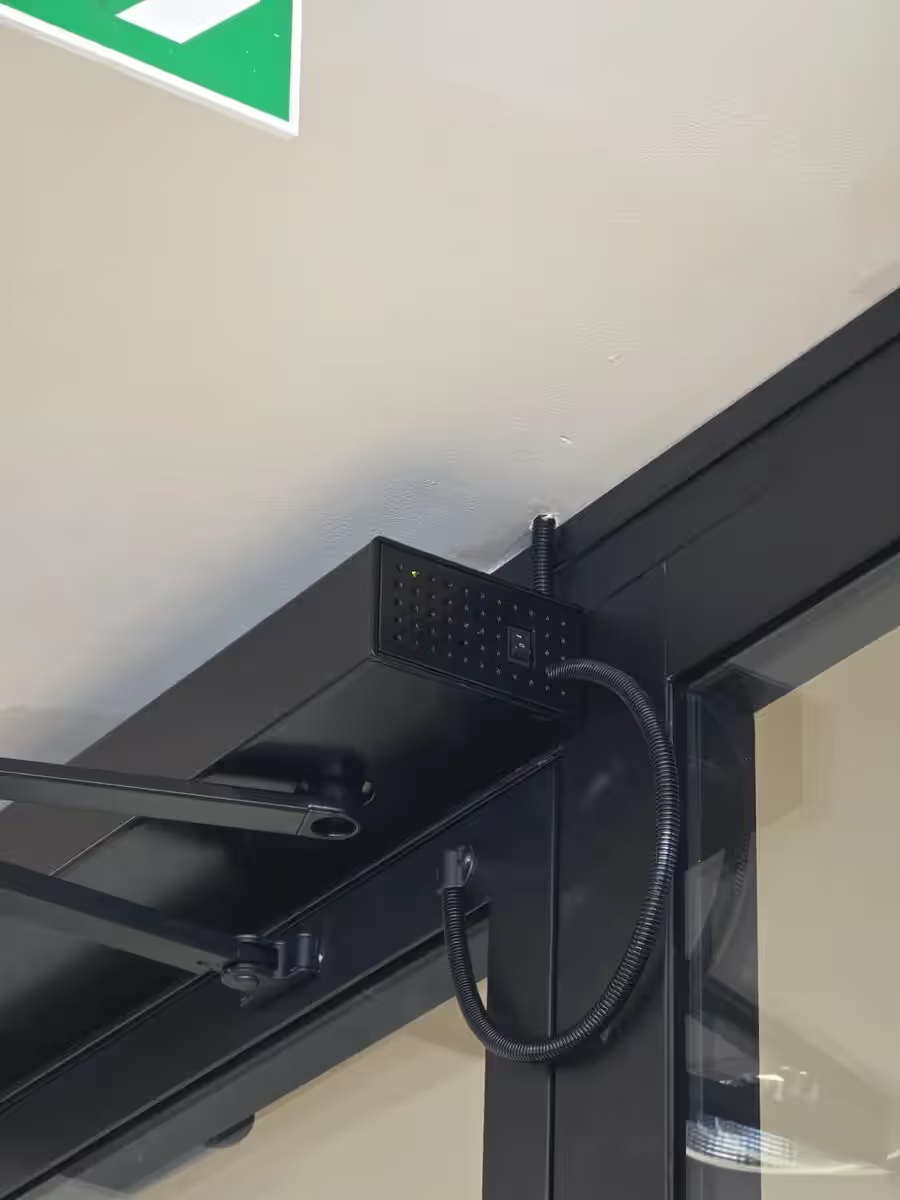
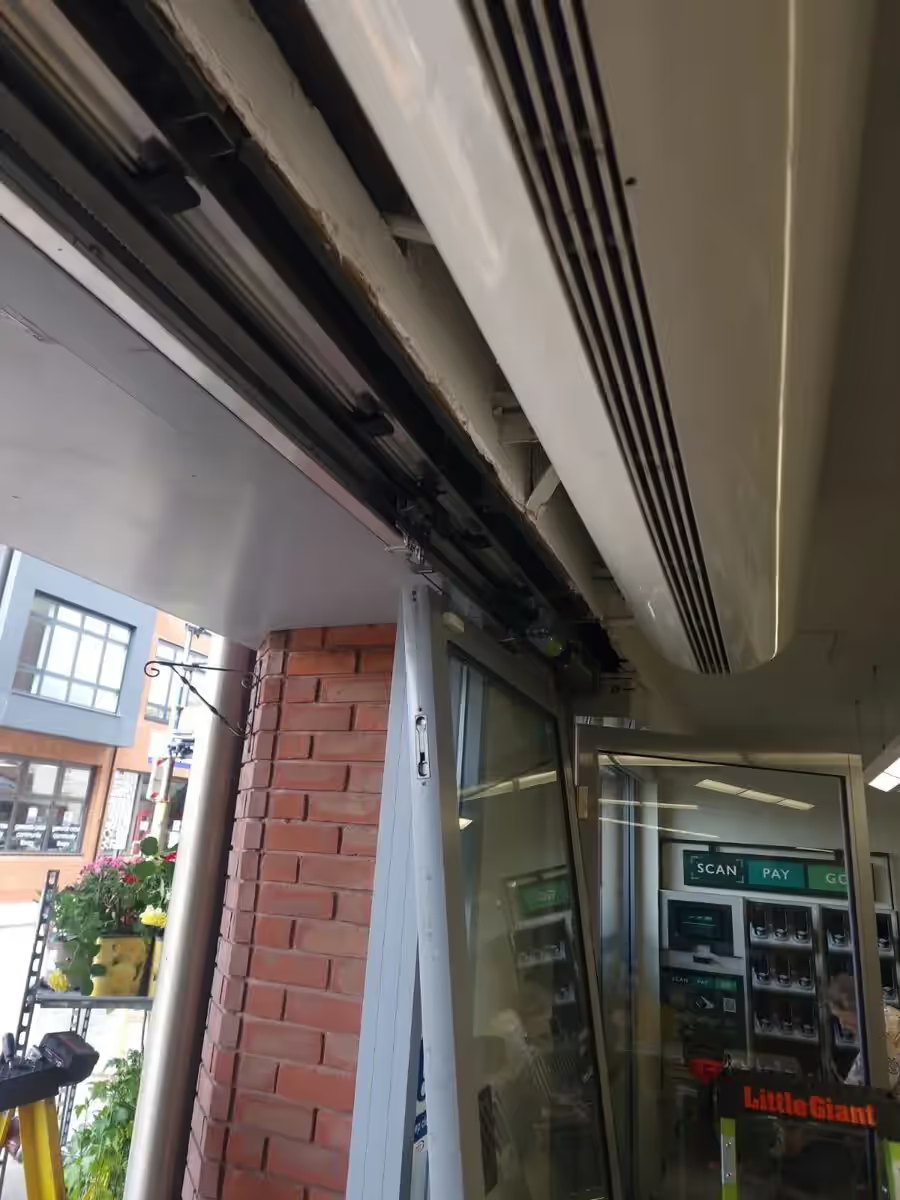
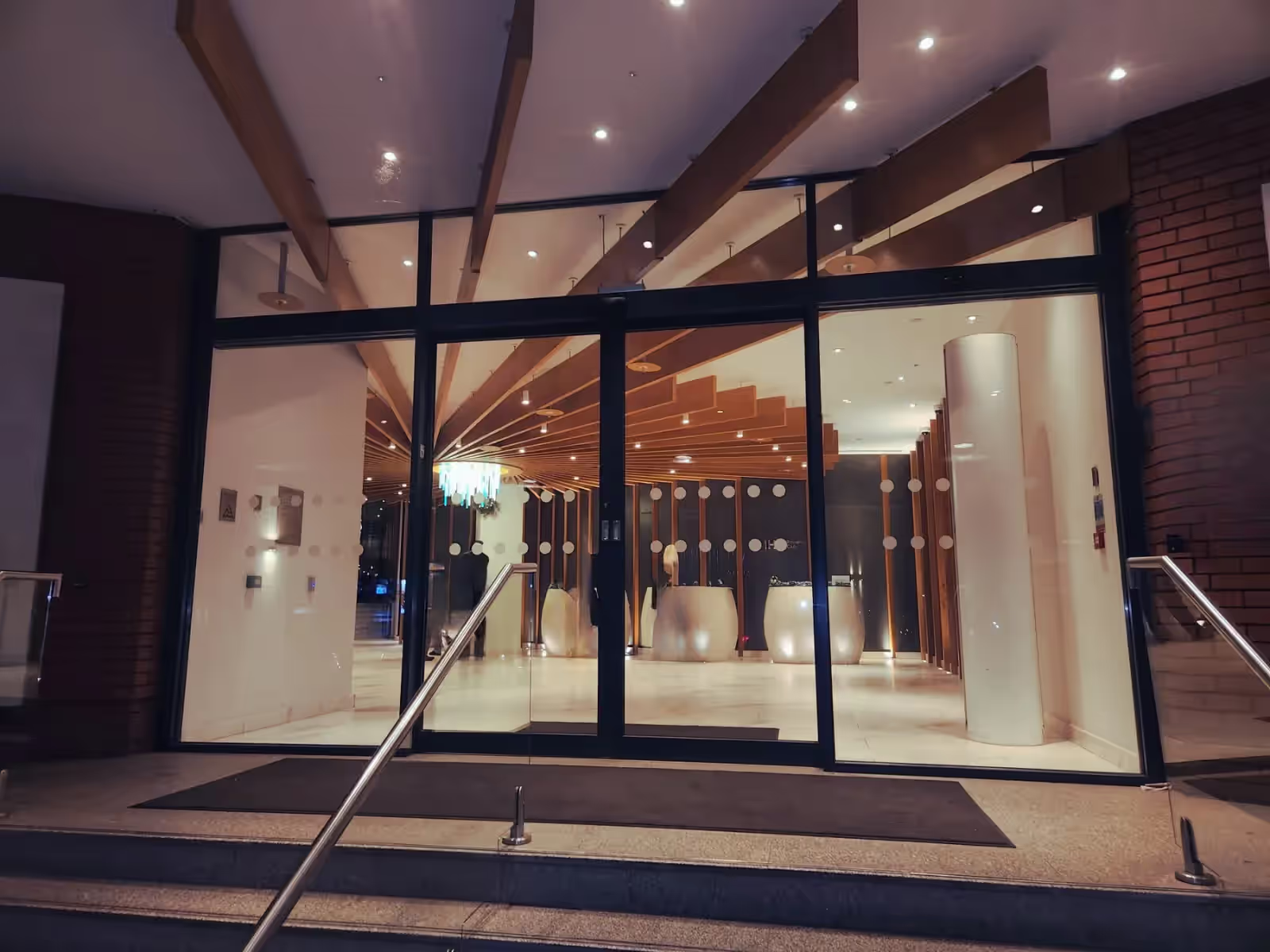
An automatic door maintenance contract is only as useful as its scope. The law requires powered doors to be kept in efficient working order, but it sets no servicing interval and does not demand a contract, so the document itself has to answer what is tested, how often, how quickly someone attends and what you receive in writing. This guide is written for facilities managers. It sets out what a sound contract should include, the checks BS EN 16005 points to, the reports to expect, how response times and multi-site terms should read and the questions worth putting to any supplier.
Key checks
- 01Get the scope in writing: every door by location and type, the checks made each visit and what is excluded.
- 02Visit frequency follows the manufacturer's schedule and how hard each door works, not a standard package.
- 03Expect a written record after every visit and attendance targets set by fault priority.
What the law asks for, and what a contract adds
No law names an automatic door maintenance contract. Regulation 5 of the Workplace (Health, Safety and Welfare) Regulations 1992 says workplace equipment "shall be maintained (including cleaned as appropriate) in an efficient state, in efficient working order and in good repair", and HSE's Approved Code of Practice, L24, lists powered doors by name among the equipment that needs a suitable system of maintenance. Neither sets an interval.
A contract is the practical way to run that system. It fixes who services the doors, how often, to what scope and what evidence is left behind. It is a way of showing the duty is met, not a legal requirement in itself, which is why the quality of the scope matters more than the existence of a contract.
What a maintenance contract should include
Start with the asset register. Every door the contract covers should be listed by site, location, make, model and type (sliding, swing, folding or revolving), with any door deliberately left out named as an exclusion. For a new supplier, that register comes from a survey before the contract starts, so the scope is agreed on what is actually installed rather than on assumption.
Then the scope of each visit. A good visit tests the safety functions, not only the motor: detection zones, force and speed settings, battery back-up, emergency behaviour and any fire alarm link, with adjustment and the replacement of wear parts as the written scope allows. The contract should say whether parts, labour and call-outs between visits are inside the agreement or priced separately, and how a repair is quoted and approved before work starts.
Finally the commercial terms: contract length and notice period, who on your side can instruct work, how out-of-hours access is arranged and how the supplier is told about changes such as a new door or a refit. Ask for exclusions in plain words. It is worth checking in particular whether damage from impact, glazing and parts that are no longer available are inside or outside the scope.
How often the doors should be visited
The frequency should come from the manufacturer's maintenance schedule and from how the door is used, not from a standard package. BS EN 16005 is the safety-in-use standard for power operated pedestrian doorsets, and the current edition is BS EN 16005:2023+A1:2024. On maintenance, Industry guidance on the standard says doors should be regularly maintained according to the manufacturer's specification and recommends checking the safety functions and devices at least once a year. That guidance was written against the 2012 edition, so treat once a year as a floor rather than a target.
What pushes the interval shorter is the same on every site: how many times a day the door cycles, who uses it, whether it sits on an escape route and how exposed it is to weather, grit and impact. A busy supermarket, hospital or school entrance usually needs more than a quiet internal door. Quarterly, six-monthly and annual visits are all common, and on a multi-site contract the right interval is agreed for each asset and the visits are planned around trading hours, deliveries and site access rules. The legal background is set out in the guide on how often automatic doors should be serviced.
If the contract also covers fire shutters, the interval comes from the fire strategy and the fire risk assessment rather than from the door standard. The guide to fire shutter drop test servicing covers what government guidance suggests and what to record in the fire log.
BS EN 16005 and the safety checks
BS EN 16005 covers sliding, swing, revolving and folding doors, including doors on escape routes. It is a standard, not a statute. ADSA, the Automatic Door Suppliers Association, says EN 16005 took effect from April 2013 and applies to installations made after that date. For an existing door the current standard is seen as best practice, and the owner or occupier is expected to do what is reasonable and practicable to comply with the latest standard, supported by a documented risk assessment. A significant change, such as a different model of drive unit, makes it a new machine.
That is why a contract should say which standard its checks are made against and what is recorded, rather than promising that a door is "compliant". Where it applies, force, sensor and safety-device checks on powered pedestrian doors can be written into the scope and recorded door by door. Be wary of any wording that promises compliance without saying what was checked and when, because settings and wear can change after the engineer has left.
Your own staff have a part to play between visits. ADSA says it is "essential that the occupier carries out frequent safety checks" and is clear that these "do not replace the inspection and maintenance required by the authorised door technician". The contract should say what your team is expected to check and who to call when a door fails that check.
Reports and records to expect
Every visit should end with a written record: what was tested, what was found, what was adjusted or replaced and anything that needs a decision, with the date and who carried out the work. Records should be kept door by door and in the same format at every site, so they can go to an insurer, a fire risk assessor or a client audit without being reassembled from emails. Avanti issues a documented report after each visit and uses one service-record format across every asset at every site.
Automatic doors are also machinery. Under the Provision and Use of Work Equipment Regulations 1998, where machinery has a maintenance log, the employer must keep it up to date, so ask for reports in a form you can attach to that log or to your helpdesk ticket. Where you work through an FM company or managing agent, check that visit reports and reactive job records go to whoever holds the contract.
Reports should also say plainly when something is unsafe. ADSA notes the technician "has a legal requirement to ensure the door system is safe when they leave site" and should stop an unsafe door from operating rather than leave it running. A good record states if a door was taken out of use, why, and what is needed to bring it back. Reactive attendance should sit in the same record as planned visits, so the estate keeps one service history.
Response times: what to look for
A response time is only useful if it is written down and tied to a priority. Ask how faults are classified, what the target is for each class, whether the target is attendance on site or only an acknowledgement, and which hours it covers. "We'll get someone out" is not a target.
Avanti's standard attendance targets are 24 hours for a priority 1 fault, where the site is not secure, and 48 hours for other failures. Written quotations are targeted within 48 hours once the scope is clear. These are targets, and on a contract any tighter site-specific commitments are agreed in writing in the service level agreement once the estate and its operational risks have been reviewed.
Put the same questions to every supplier you compare, including whether the target is the same for every site on the agreement. If a door has already failed, the emergency page is the route rather than a contract question.
Multi-site terms
Across several sites the value of a contract is consistency. Look for one asset register covering every site, one visit schedule with nearby sites grouped to cut disruption, one record format and one accountable contact for the doors in scope. Mixed equipment from several manufacturers can sit on the same register as long as the survey records each make, model and condition.
Check how access is handled at each site (keys, permits, trading hours, deliveries, term time), whether priorities and targets can differ by site, how a new or acquired site is added and a closed one removed, and how the price moves when the register changes. Avanti quotes contracts per surveyed asset register after a free site walk-round, not from a generic rate card.
If you are moving from another supplier, the survey should record the make, model and condition of every door, flag anything outside a safe or supportable scope and agree any remedial work before the contract starts. If your process needs a supplier questionnaire completed, the maintenance contracts page lists what Avanti supplies for onboarding.
Questions to ask a supplier
On scope: which doors are covered, by location and type? Which checks are made on each visit, and against which standard? What is excluded, and how are parts and repairs priced and approved?
On frequency and records: who sets the visit frequency, and on what basis? What will I receive after each visit, in what format and how soon? Will reactive visits appear in the same record as planned ones?
On response: what are the attendance targets for each priority, and what hours do they cover? Are they targets or commitments, and what happens when one is missed? Can they differ by site?
On the relationship: who is my single point of contact? What is the contract length and notice period? How are new doors and sites added? Can you take over from my current contractor, and what does the survey involve? The maintenance contracts page shows how Avanti answers these for an estate.