
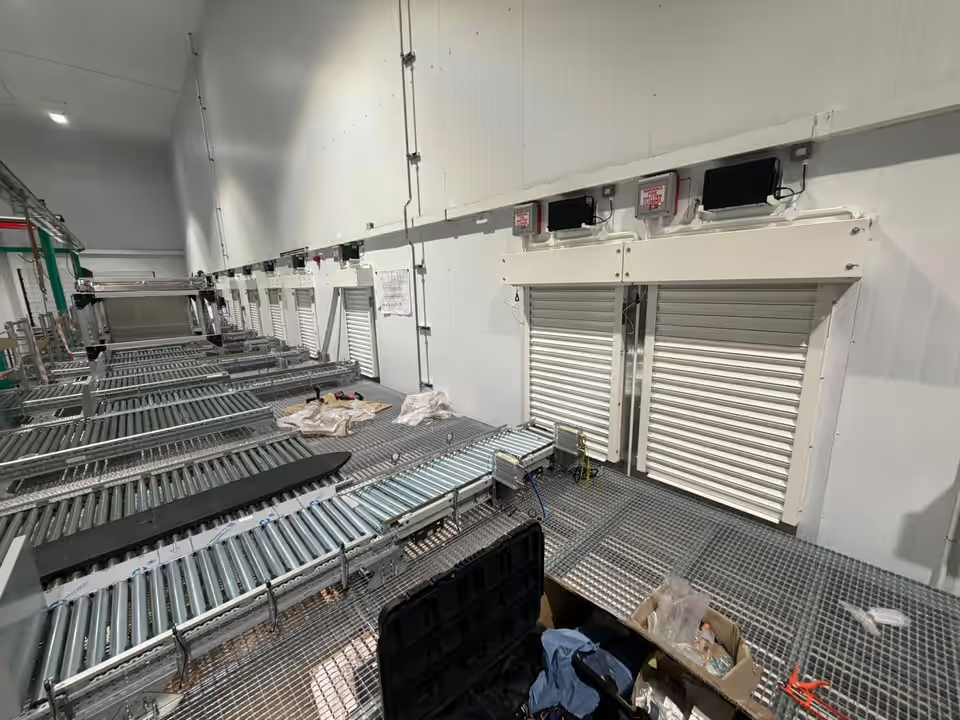
The law does not set a fixed interval for testing fire shutters. It requires a suitable system of maintenance that keeps them in efficient working order. HM Government's example fire safety checklist suggests a monthly check that compartment shutters work and a six-monthly test of their release and closing mechanisms by a competent person. This guide explains what that test involves, what the rating on the label means and what to record.
Key checks
- 01Article 17 of the Fire Safety Order requires maintenance but sets no interval.
- 02Government guidance suggests monthly checks and a six-monthly competent-person test.
- 03Keep test evidence that matches the installed shutter, plus a dated record of every test.
How often: what the law says and what the guidance suggests
The duty sits in Article 17 of the Regulatory Reform (Fire Safety) Order 2005. The responsible person must make sure fire safety facilities, equipment and devices are "subject to a suitable system of maintenance and are maintained in an efficient state, in efficient working order and in good repair". In a workplace, Article 3 makes the employer the responsible person; otherwise it is whoever controls the premises, or the owner.
Article 17 names no frequency. The most authoritative interval comes from HM Government's fire risk assessment guides, whose example maintenance checklist asks monthly whether "all roller shutters provided for fire compartmentation work correctly" and six-monthly whether "the release and closing mechanisms of any fire-resisting compartment doors and shutters" have been "tested by a competent person". It is an example checklist, not a legal interval, but it is what a fire risk assessor will usually expect to see.
Busy or harsh sites may need more. The same guidance notes that fire-resisting doors and shutters "will require routine maintenance, particularly to power operation and release and closing mechanisms", and the DHF, the door and hardware trade body, calls a regular maintenance programme essential for every industrial door and shutter.
What a drop test actually checks
A drop test proves the shutter does what the fire strategy assumes. The engineer releases it the way a real fire would, by the alarm signal, a heat release or a fusible link depending on how it is configured, and watches the full cycle.
The checks follow the closing sequence: the release mechanism lets go, the curtain descends under stored energy or gravity rather than relying on mains power, the descent is controlled rather than a free fall, the curtain closes fully to the threshold with nothing obstructing the line, and any warning sounder and reset behave as designed. HM Government guidance describes the closing as a "controlled geared mechanism", and the DHF describes release to close by spring or gravity when the hold-open system lets go.
The visit should also confirm the shutter can be opened and closed by hand. Approved Document B says the fire and rescue service "should be able to manually open and close rolling shutters without the use of a ladder". Guides, curtain, bottom rail, seals and the control panel are then inspected and adjusted, and anything that affects the fire performance is reported, not quietly fixed.
What the rating on the label means
Fire resistance for doors and shutters is classified under BS EN 13501-2. The letters describe the performance and the number is minutes. E is integrity, which is mandatory: the shutter stops flame and hot gas passing. I1 or I2 adds insulation, limiting the temperature on the unexposed face. W is radiation. So an E 60 shutter holds integrity for 60 minutes, and an EI 120 shutter holds integrity and insulation for 120. Certified products commonly carry ratings up to 240 minutes.
The evidence behind the rating comes from fire testing to BS EN 1634-1, with BS EN 1634-3 for smoke control. New fire and smoke resisting industrial doors and shutters are CE or UKCA marked against BS EN 16034 alongside the industrial door standard EN 13241, which the DHF confirms became mandatory for new products in November 2019. That change applied to new products placed on the market; it does not in itself condemn an older shutter.
What matters on site is that the evidence fits what is installed. Approved Document B asks that test evidence is "applicable to the complete installed assembly", and warns that "small differences in detail may significantly affect the rating". Size, fixings, the wall it is fixed to and the control gear all count.
How the shutter is told to close
There is no single trigger. Where a shutter crosses a means of escape, Approved Document B says it "should only be released by a heat sensor, such as a fusible link or electric heat detector" and should not be closed by smoke detectors or the fire alarm, so an escape route is not shut early. Elsewhere, shutters are commonly linked to the fire alarm so a compartment closes as soon as the system activates.
Where the alarm triggers the shutter, the interface itself is part of the safety system. Approved Document B asks designers to follow the relevant part of BS 7273, and BS 7273-6:2019 covers the interface between fire detection and alarm systems and ancillary equipment, naming fire-resisting shutters in its scope. For kitchens and serveries, government guidance says fire shutters should work "both manually and by fusible link" and also close when a detection system is installed and activates.
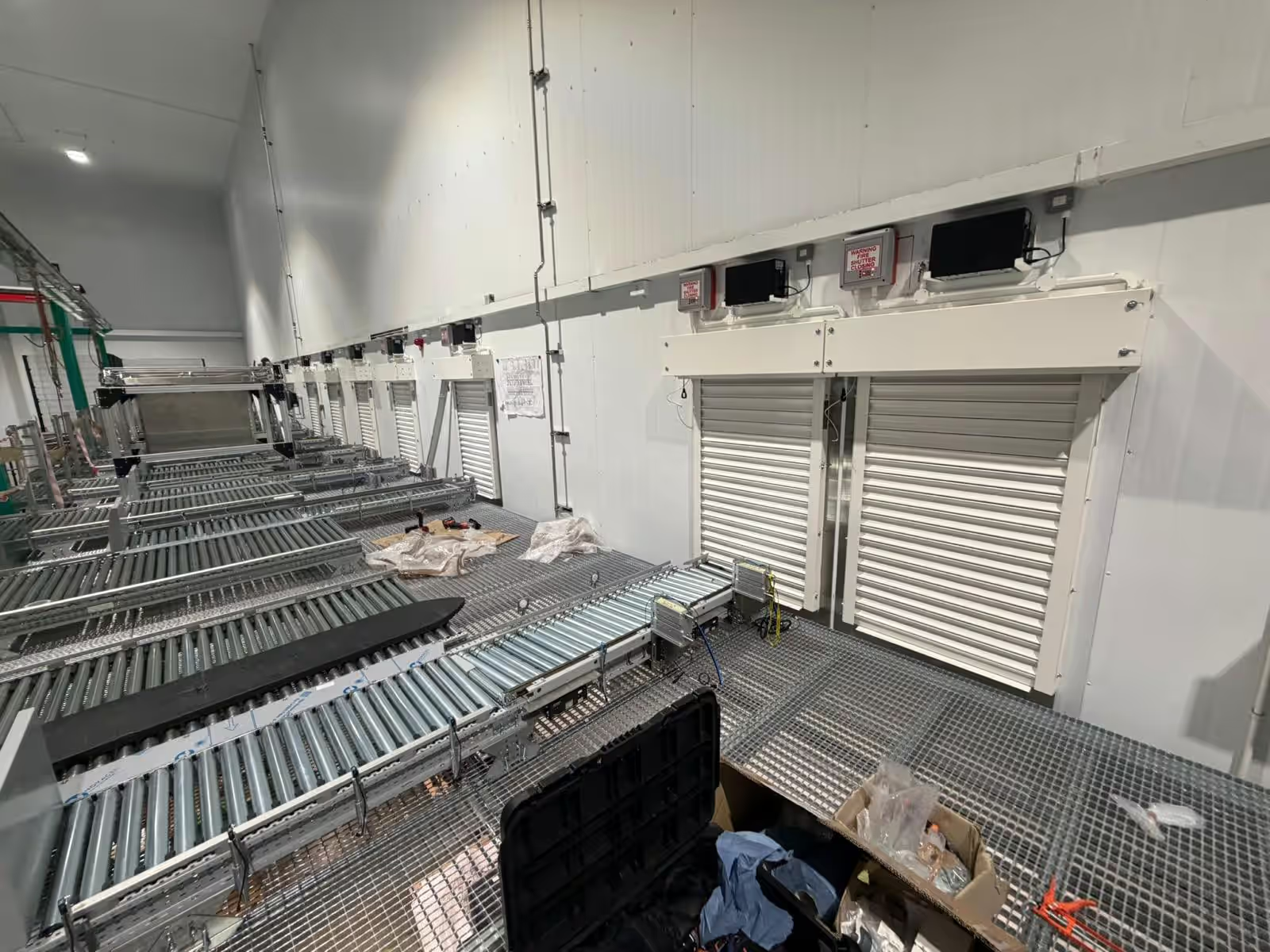
That is why a drop test and an alarm cause-and-effect test belong together. A shutter that drops perfectly by hand but never receives the alarm signal fails on the day it matters. The Alconbury project shows a real alarm-interfaced installation with a programmed closing delay and battery back-up over live conveyor lines.
What to keep in the fire log
Record every test with the date, who carried it out, how the shutter was released, whether it closed fully and within its designed behaviour, any defects and what was done about them. Keep the product's test evidence and classification alongside, plus the alarm interface details so the next engineer knows what should trigger each shutter.
Government guidance lists "manual self-closing devices for roller shutter doors in fire compartment walls" among the facilities to be "properly maintained by a competent person". A clear log is how the responsible person shows that happened, and it makes repeat faults obvious instead of anecdotal.
When a shutter fails its test
Treat a failed drop test as a fire safety defect, not a door fault. Tell whoever owns the fire risk assessment, agree any interim measures, and get the repair booked with the test repeated afterwards. A shutter that will not close leaves the compartment line open.
For a failed or damaged shutter, the repairs page covers reactive work, and the emergency page is the route when something needs attention now. Planned six-monthly testing can sit on a maintenance contract alongside the rest of the site's doors.