
This article explains the three parts inside a commercial automatic door: something that notices you, something that moves the door, and something that keeps the door from hurting anyone. It is a guide for facilities teams. For a new entrance or a failed one, use the automatic doors page.
Key checks
- 01Activation sensors decide when to open; safety sensors decide when it is safe to move.
- 02The operator, motor, drive and controller, does the moving and holds the settings.
- 03BS EN 16005 governs the safety package; battery back-up keeps behaviour predictable in a power cut.
The sensors: how the door knows you are there
Most commercial doors use microwave radar mounted over the doorway to detect approaching movement, sometimes combined with infrared presence detection that watches for people standing still. Push pads, keypads, fobs and access-control systems do the same job where entry needs to be controlled rather than open to everyone.
Activation is only half the sensing story. Separate safety sensors, threshold beams across the opening, side-screen detection where sliding leaves park, and on-door laser scanning on swing doors, watch the space the door moves through, so the leaf slows or stops if someone is in the way.
The operator: the machine above the door
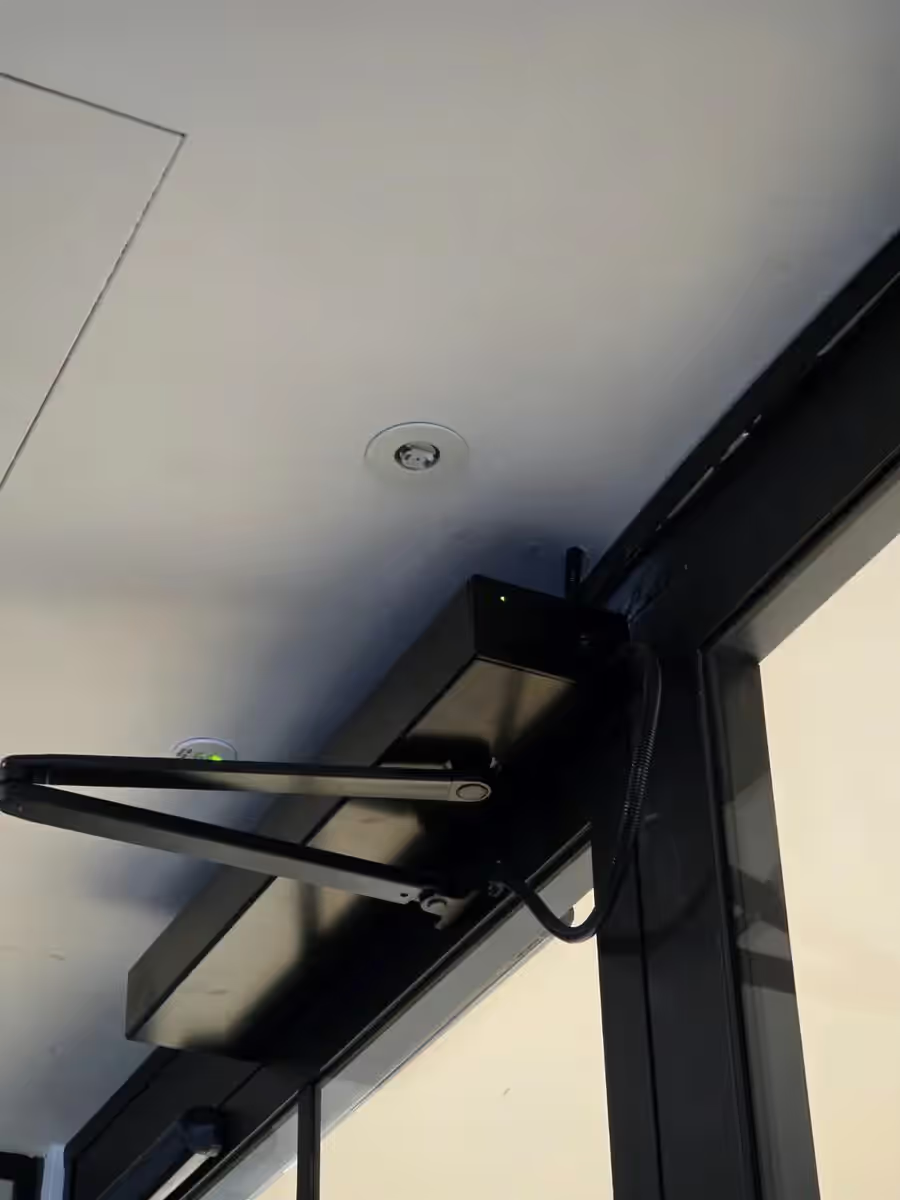
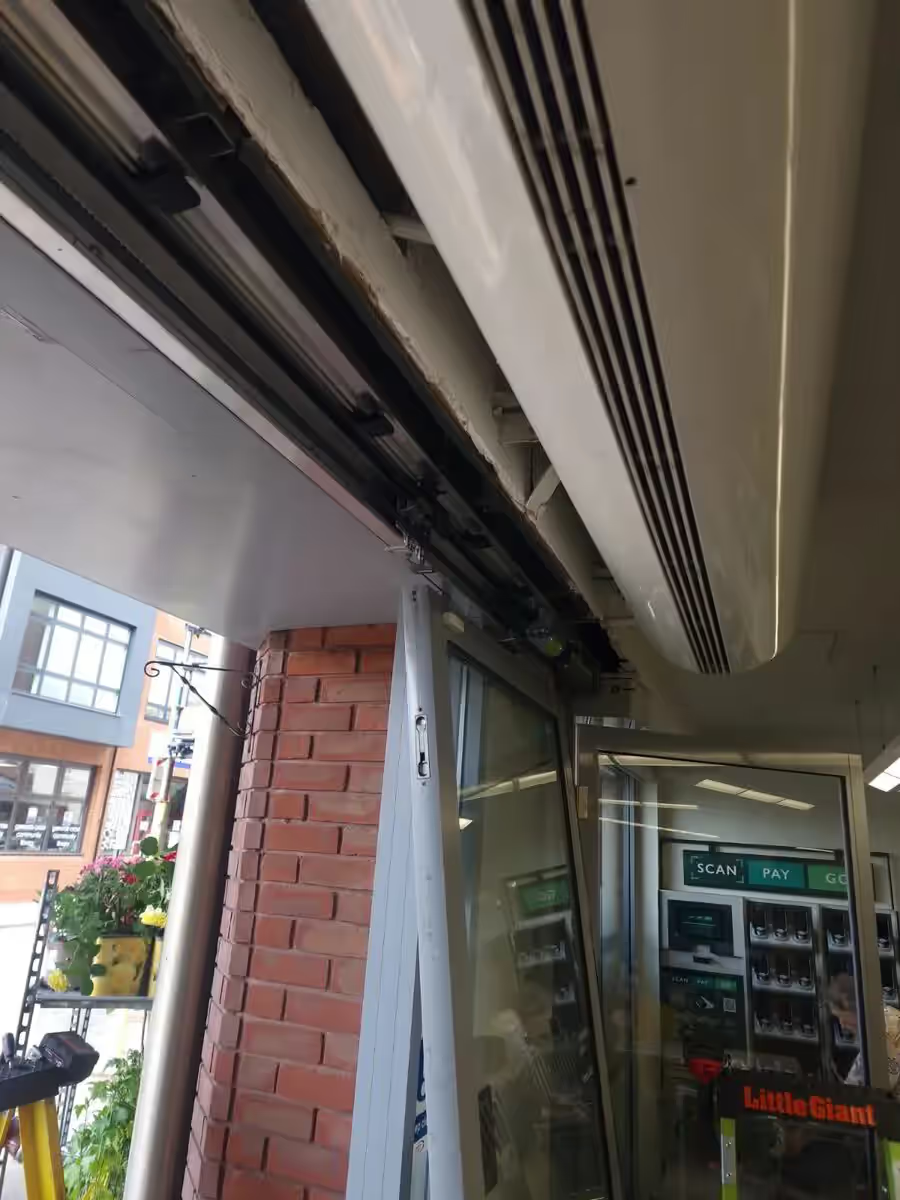
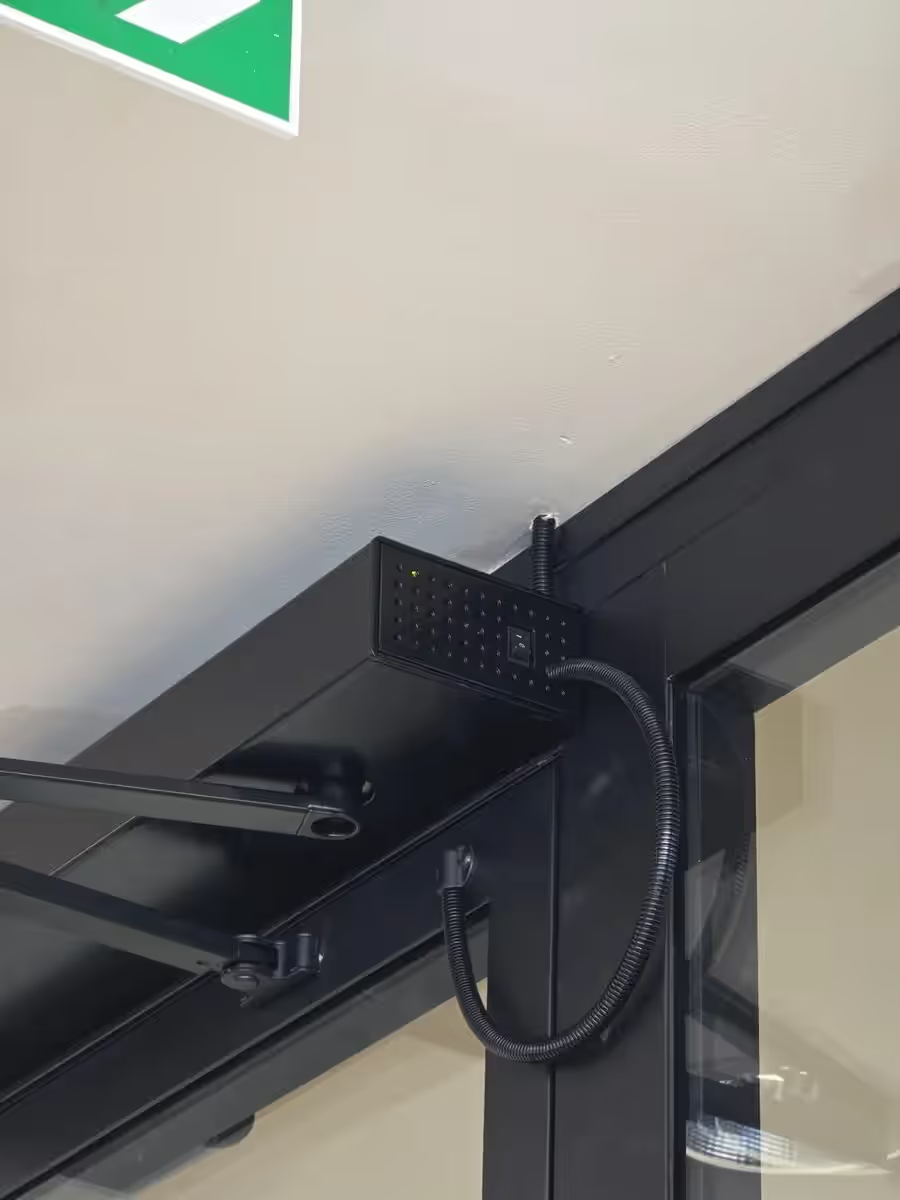
The operator is the drive unit, usually hidden in a header box above the opening. On a sliding door it moves the leaves along a track with a toothed belt; on a swing door an arm or spindle powers the leaf through its arc. A controller stores the opening speed, hold-open time, closing force and operating mode, automatic, exit-only, hold-open or locked, selected from a program switch that staff can use without an engineer.
Good installations add an EBU battery back-up module, so a power cut does not leave the entrance stuck open or trap it shut: the door completes a controlled, predictable action instead. Operators are also commonly wired to the fire-alarm panel so the entrance responds correctly, typically opening, when the alarm sounds.
The safety standard that ties it together
In the UK, BS EN 16005 is the safety-in-use standard for powered pedestrian doors; the current edition is BS EN 16005:2023+A1:2024, which replaced the withdrawn 2012 version. It requires a risk assessment of the hazards, protection against crushing, shearing and impact through sensing and safety distances around the opening, and testing at handover. A compliant installation is documented, and periodic servicing keeps the safety functions demonstrably working. Our guide to how often automatic doors should be serviced covers the maintenance side.
That is why an automatic door is best treated as working safety equipment rather than a convenience: the sensors, forces and emergency behaviour are all part of a tested system, and changes to any one part affect the whole entrance.
Sliding, swing and revolving: the same three parts, different jobs
A sliding entrance parks the leaves beside the opening, so the full width stays clear for trolleys, wheelchairs and peak retail traffic. That is why sliding doors are the default for supermarkets, hospitals and public buildings. The automatic sliding doors page covers bi-parting and single-leaf systems, including the Reigate Town Hall and Worzals Wisbech installations.
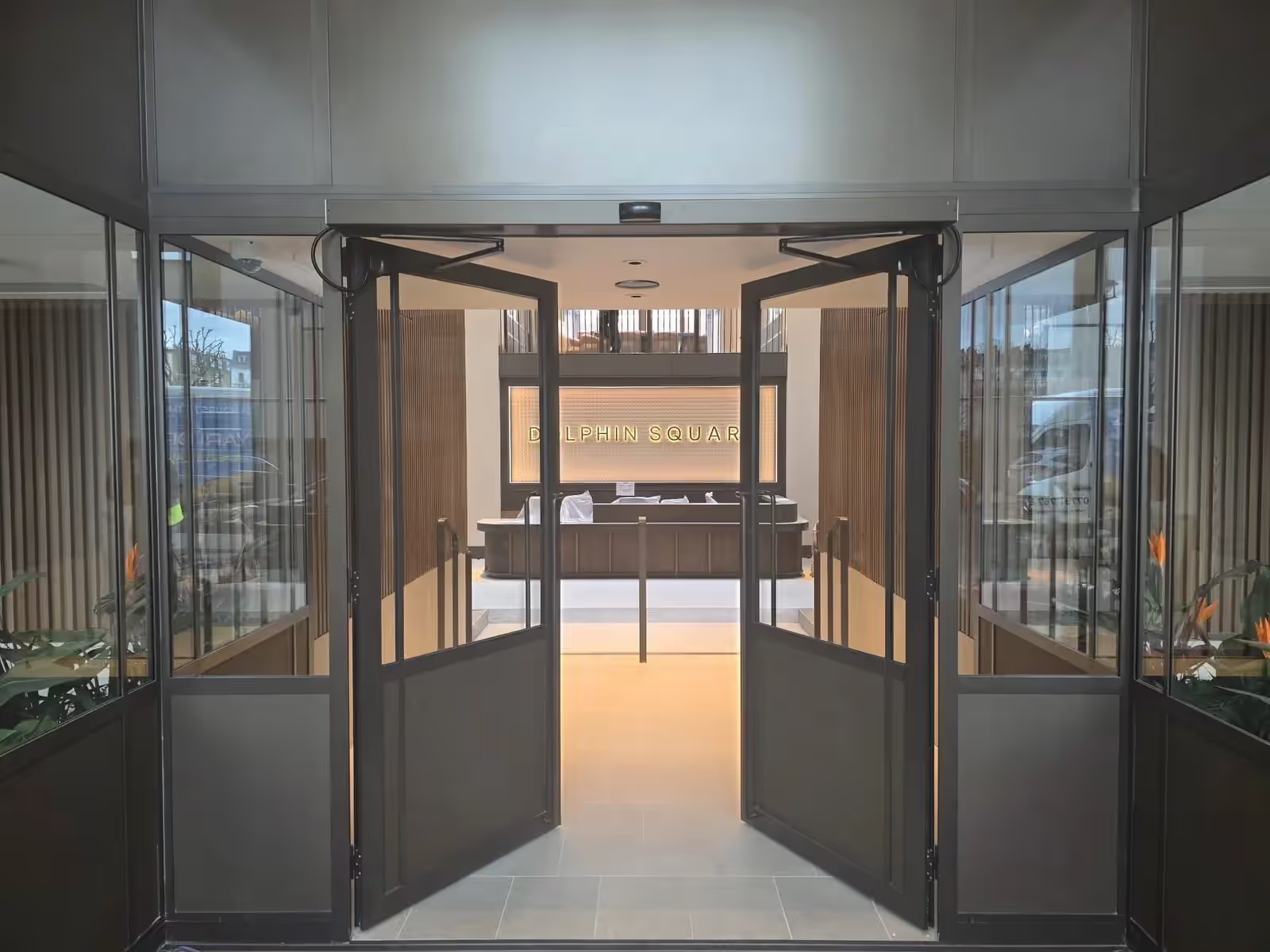
A swing operator powers a hinged leaf. Existing doors can often be automated without replacing the doorset, which is how five pairs of Dorma ED100A operators were fitted at Dolphin Square in Pimlico. Revolving doors keep a lobby sealed while people move through, and they almost always sit next to an accessible pass door. Pick the type from the opening and the traffic, not from a catalogue photo. The commercial route for all four systems is the automatic doors page.
When the door should be treated as a repair, not a mystery
If an entrance opens late, closes on people, hunts, or sits open after a power blip, the sensors, operator settings or battery back-up are usually out of spec rather than worn out. A documented service visit tests those functions against EN 16005 instead of swapping parts at random.
For a new entrance or a failed one, request a survey from the automatic door company page. Planned visits sit on maintenance contracts.