
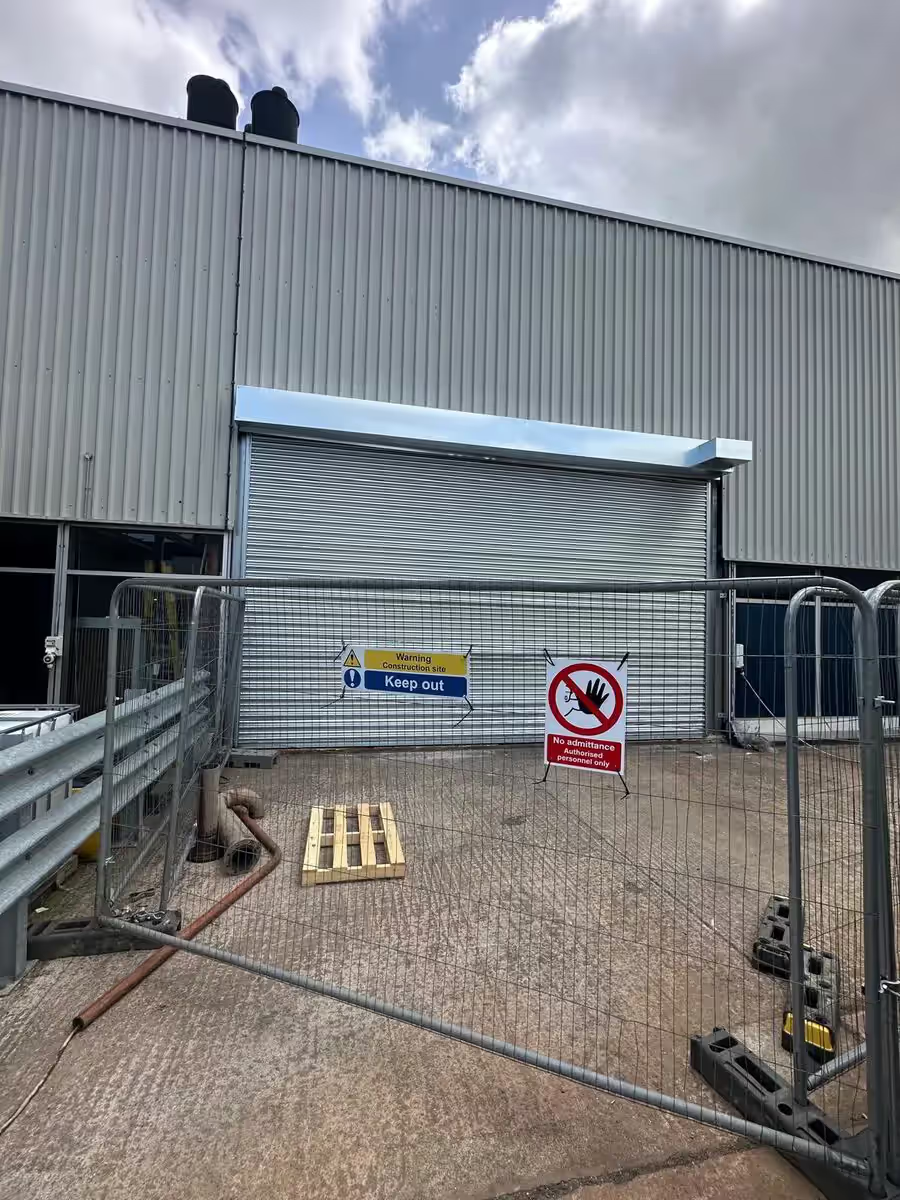
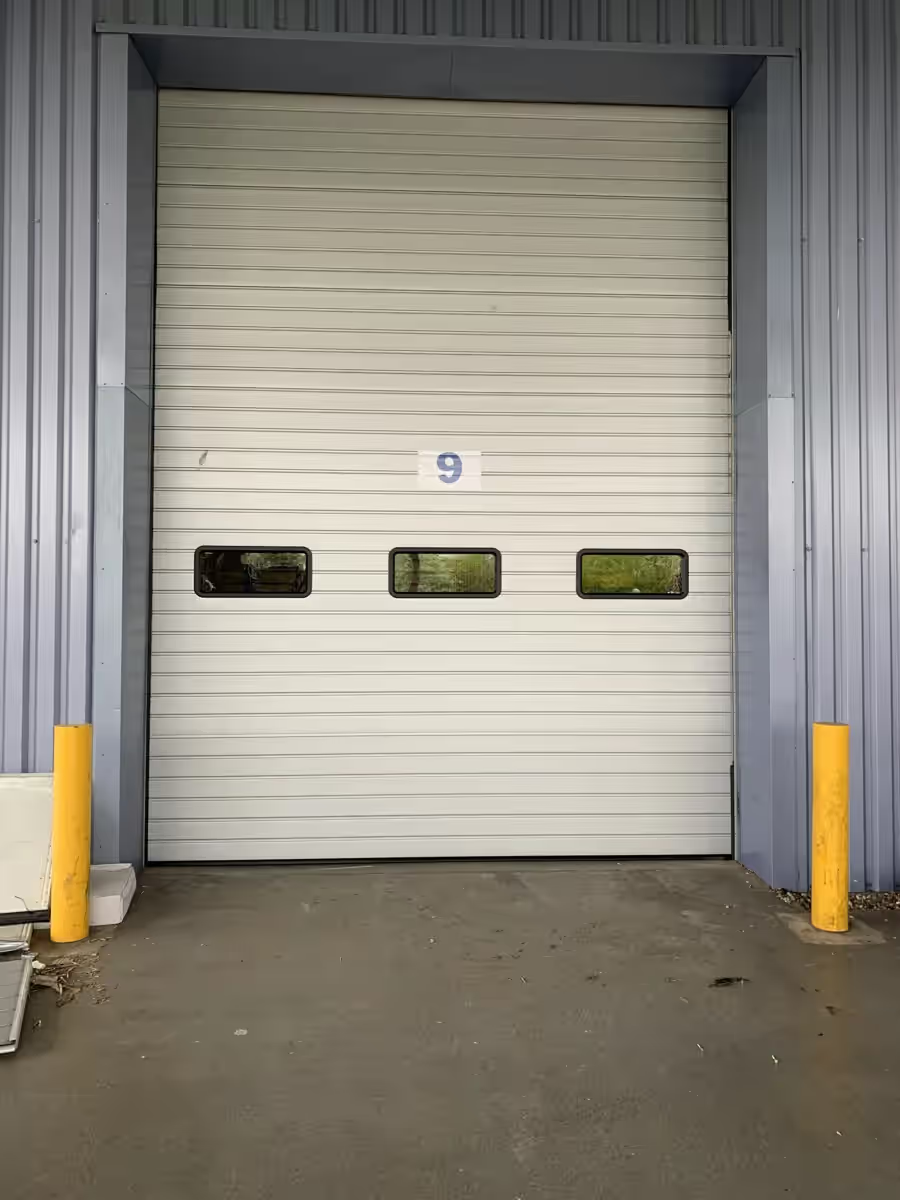
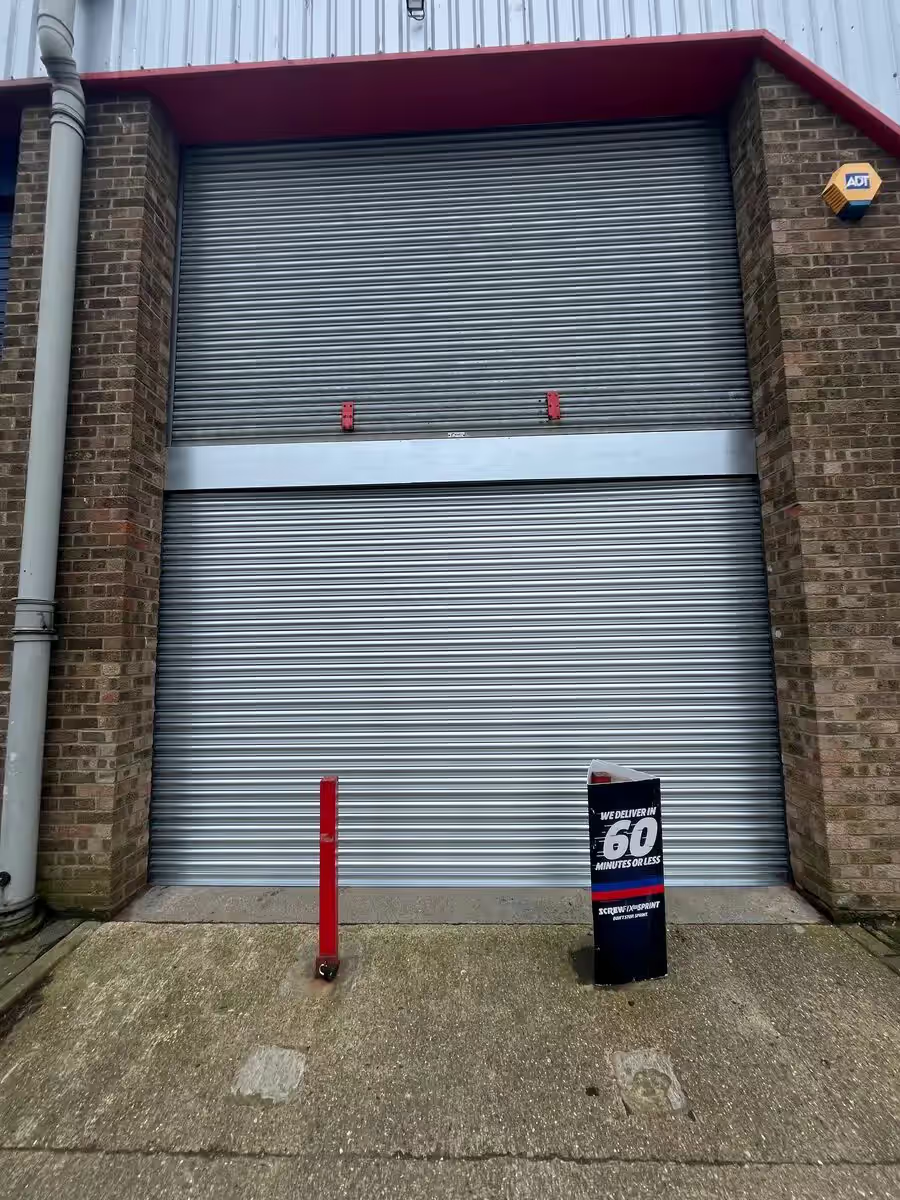

An industrial sliding door closes a large opening by moving one or more heavy leaves sideways along a track, instead of rolling up into a barrel or lifting overhead in sections. For the right opening it is the simplest, most robust way to secure a big doorway, but it is one option among several, and the building usually decides.
Key checks
- 01Sliding doors suit very wide or very tall openings with wall space beside them.
- 02Compare against roller shutters and sectional doors before committing.
- 03Powered sliding doors need the same safety engineering as any powered gate or door.
How it differs from a roller shutter or sectional door
A roller shutter coils above the opening and needs barrel space at the head; a sectional door runs up and back under the roof, taking ceiling space; a sliding door needs neither, it parks beside the opening instead. That makes sliding doors attractive where headroom is limited, where the opening is unusually wide or tall, or where the door must also carry personnel wickets, fire ratings or heavy security hardware.
The trade-off is wall space: the door needs somewhere to slide to. Buildings without clear flank walls usually end up with a roller shutter or sectional door instead, which is why the survey starts with the structure rather than the product.
Where industrial sliding doors earn their keep
Typical homes are warehouses, factory bays, agricultural buildings, rail and aircraft doors, and older industrial premises whose structures were never designed for an overhead track. Because the leaf hangs from a top track and runs on guides, very large openings can be closed with comparatively simple, serviceable mechanics, and manual operation stays practical even at sizes where other door types would demand a motor.
Powered versions take a drive unit, safety edges and presence detection, and fall under the same duty of care as any powered door or gate: forces limited, entrapment points protected, and the installation tested and documented.
What to check before specifying one
Measure the opening and the parking wall, confirm what the head structure can carry, and be honest about traffic: a doorway cycled forty times a day needs different engineering from one opened twice a week. Wind exposure, floor condition along the guide line and any fire-separation role the door plays all belong in the specification too.
If the flank wall is not there, the answer is usually a roller shutter or sectional door rather than a compromised slider, our industrial doors page covers the full range and where each fits.