
Automatic Barriers
Rising Bollards
Automatic bollards that physically control vehicles and vanish for authorised access, supplied, installed, serviced and repaired.
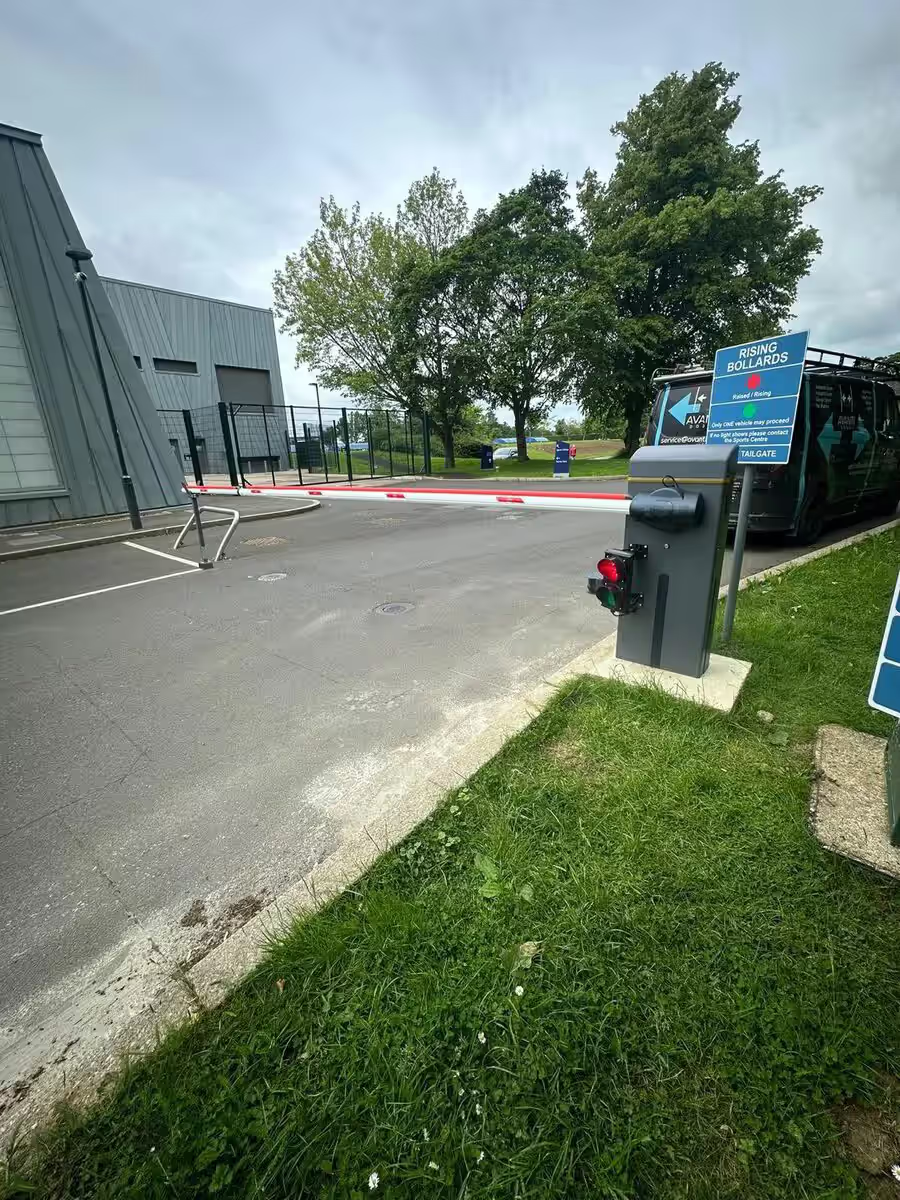
Rising bollards
The barrier nobody can drive around
Rising bollards are the barrier you cannot drive around, under or through, a steel cylinder that sinks flush into the carriageway for authorised vehicles and stands solid against everything else. Where an arm barrier manages traffic, bollards physically stop it, without gates, arms or anything for pedestrians to walk into. Avanti Doors supplies, installs, services and repairs automatic, semi-automatic and removable bollards across the UK from our Norfolk base.
Where they fit
Pedestrian zones, private roads and forecourts
Bollards solve the access problems arms and gates cannot: a town-centre street that must be open plaza by day and closed to traffic by night; a private road where signs are ignored; a forecourt or yard entrance where anything above ground gets hit, climbed or vandalised. Because the closed state is a row of steel posts rather than a horizontal arm, there is nothing to duck under, lift or snap, and when open, the space reads as completely unobstructed.
The engineering is mostly underground, which is why bollard jobs are won or lost at the survey: services and drainage in the carriageway, a pit that will not become a sump, detection that keeps the post down while a vehicle is over it, and an agreed route for the vehicles that must always get in. Where a site needs flow management as well as physical control, bollards pair naturally with a rising-arm barrier, the arm manages the queue, the bollard enforces the rule.
Before specification
What the bollard survey establishes
Threat level, ground conditions, traffic logic and fallback access are settled before any steel goes in the ground.
Duty and threat level
Managing courteous traffic needs a standard automatic bollard; resisting deliberate vehicle attack needs impact-rated equipment. The honest starting question is what the bollard must actually stop.
Below-ground conditions
Bollards live in the carriageway: services, drainage, groundwater and surface build-up decide the pit design, and a drainage or pump provision keeps the mechanism alive through winter.
Traffic logic
Loops, credentials and interlocks decide when the bollard drops and, critically, when it must not rise: presence detection over the pit prevents a bollard lifting under a stationary vehicle.
Fallback operation
Power failure behaviour, manual lowering and an agreed emergency-access route (fire, ambulance, refuse) are designed in from the start, not improvised at the kerb.
Common questions
Rising bollard FAQs
Quick answers for estates, councils and site managers considering bollard schemes.
1Where do rising bollards beat an arm barrier or gate?
Anywhere the control must be physical or the streetscape must stay open: pedestrianised town-centre zones, private roads plagued by rat-running, forecourts where an arm would be climbed or snapped, and mixed pedestrian-vehicle areas where a moving arm or gate leaf would be a hazard. When lowered, the entrance is completely clear, no posts, arms or housings in the walking line.
2Are rising bollards safe around vehicles and pedestrians?
Correctly installed, yes: presence loops over the pit stop the bollard rising under a vehicle, flashing lights and marking make the unit conspicuous, and rise speed and forces are controlled. The notorious videos of cars speared by bollards are almost all tailgating through a closing sequence, which detection and interlock design exists to prevent.
3What maintenance do automatic bollards need?
The pit is the hard part: drainage, debris and winter grit are what kill bollard mechanisms, so planned visits clear and inspect the pit, test detection and lights, and check the drive (hydraulic or electromechanical) before it seizes. A bollard that has stood unmaintained for two winters is usually a rebuild, not a service.
4Do you install removable or fixed bollards too?
Yes, many schemes mix automatic bollards on the main traffic line with fixed or key-removable posts closing the flanks. The automatic units carry the daily traffic; the static ones close the gaps a determined driver would otherwise find.
Bollard support
Close the road without closing the space
Send us the location, what the bollards must stop and who still needs access, we will design the scheme, the groundworks and the maintenance plan that keeps it working through winter.
- Support scope
- Automatic, semi-automatic and removable posts
- Pit, drainage and detection engineered together
- Emergency-access routes designed in
- Repairs and planned maintenance
Explore more