
Automatic Doors
Revolving Doors
Automatic revolving entrances that manage pedestrian flow and climate, supplied, installed to EN 16005, maintained and repaired for commercial buildings.
Revolving doors
Always open to people, always closed to the weather
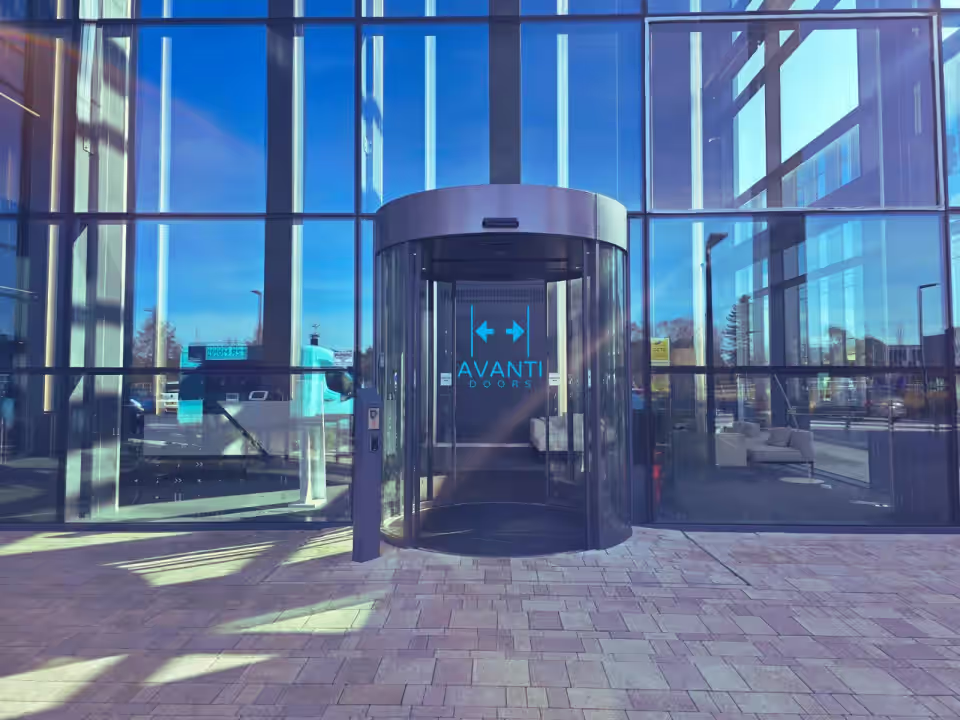
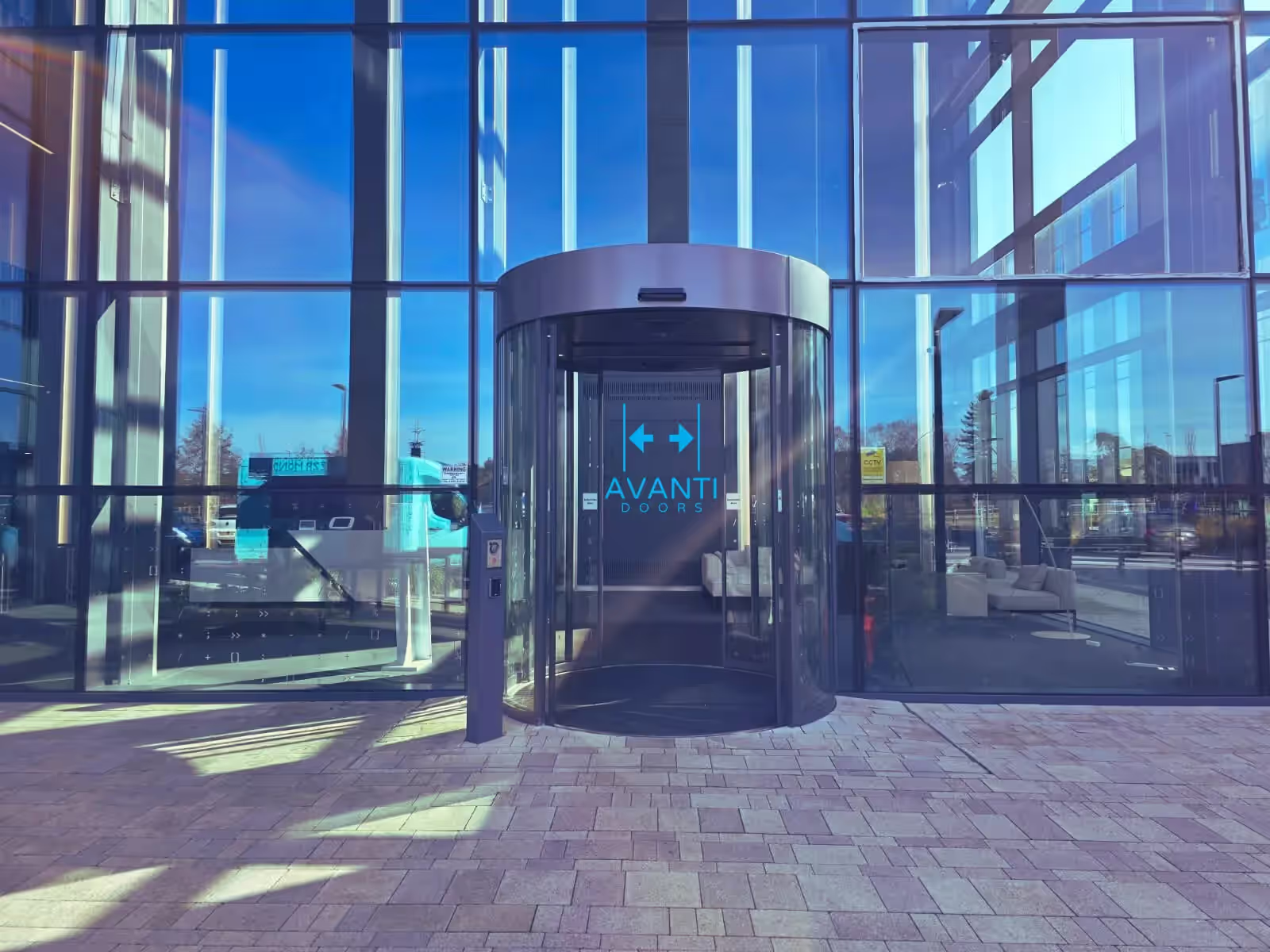
A revolving door is the only entrance that is never open and never closed: people move through continuously while the lobby stays sealed against draughts, noise and heat loss. That makes revolving systems the right answer for office receptions, hotels and public buildings where the front door would otherwise fight the heating and air-conditioning all day. Avanti Doors supplies, installs, services and repairs automatic revolving doors from King's Lynn across Norfolk, East Anglia, London and the wider UK.
Where they fit
Lobby control for front-of-house entrances
Revolving doors belong on entrances where the building's first impression and its energy bill meet: office headquarters, hotels, banks, civic buildings and any conditioned lobby on an exposed frontage. The drum keeps inside and outside air separated even at peak footfall, which steadies the reception environment, protects front-desk staff from standing in a draught and takes constant load off the heating and cooling plant.
A revolving entrance is specified as a system, not a single door. The drum handles the everyday flow; an adjacent automatic pass door, typically a sliding or swing leaf, carries wheelchairs, luggage, deliveries and escape traffic. We survey, supply and commission both parts together, with EN 16005 safety sensing, speed control and emergency break-out set up and tested before handover, and we service and repair existing revolving installations whoever originally fitted them.
Before specification
What the revolving-door survey establishes
Drum diameter, accessibility, safety and the energy case are assessed together, the entrance has to work as one system.
Diameter and capacity
Wing count and drum diameter set how many people move through per minute, and whether trolleys, luggage or buggies fit. The survey matches the drum to real peak traffic, not the brochure figure.
The accessible route
A revolving door rarely stands alone. An adjacent automatic pass door, usually a swing or sliding leaf, provides the step-free, wheelchair-accessible route and the escape path, and is specified as part of the same entrance.
Safety sensing
BS EN 16005 covers powered revolving doors, and its 2023 edition added safeguarding and a test specific to them. The door's safety sensors, speed settings and emergency behaviour are set up and tested at handover.
Energy case
Where a lobby loses conditioned air through a constantly opening door, a revolving entrance can cut that exchange dramatically, often the main reason facilities teams specify one.
Common questions
Revolving door FAQs
Quick answers for facilities and front-of-house teams considering a revolving entrance.
1Why choose a revolving door over a sliding entrance?
Climate and comfort. A sliding entrance opens fully every time someone passes, so a busy frontage effectively stands open all day. A revolving door moves the same traffic while keeping the building sealed, which steadies lobby temperatures, cuts heating and cooling loads and keeps wind, noise and street dust out. On exposed or high-traffic frontages that difference is felt immediately.
2Are revolving doors accessible?
The revolving drum itself is not the accessible route, the entrance as a whole is. Current practice pairs the revolving door with an adjacent automatic pass door for wheelchairs, buggies, deliveries and escape. We specify both parts together so the entrance meets Equality Act expectations without compromising the energy case.
3Do you repair and service existing revolving doors?
Yes. Drive units, wing sensors, floor rings, brushes, seals and emergency break-out hardware all wear with traffic, and a revolving door that has drifted out of adjustment is usually noticeable to every visitor. We take on reactive repairs and planned maintenance for existing installations as well as new supply.
4What safety standards apply to revolving doors?
BS EN 16005:2023+A1:2024 is the safety standard for powered pedestrian doors, and it covers revolving doorsets. The 2023 edition added safeguarding and a test specific to revolving doors. Building regulations add two points: Approved Document M says a revolving door is not an accessible route and needs an accessible door immediately beside it, and Approved Document B sets conditions, such as a failsafe arrangement or an adjacent swing door, before one can sit on an escape route. Installations are set up, tested and documented at handover, and periodic servicing keeps the safety functions demonstrably working.
5Do you install revolving doors in Norfolk and East Anglia?
Yes. Revolving door installation, service and repair is part of the automatic-door work from the King's Lynn base, covering Norfolk, the rest of East Anglia, London and the wider UK. A survey records peak traffic, drum size and the adjacent accessible pass door before a system is quoted.
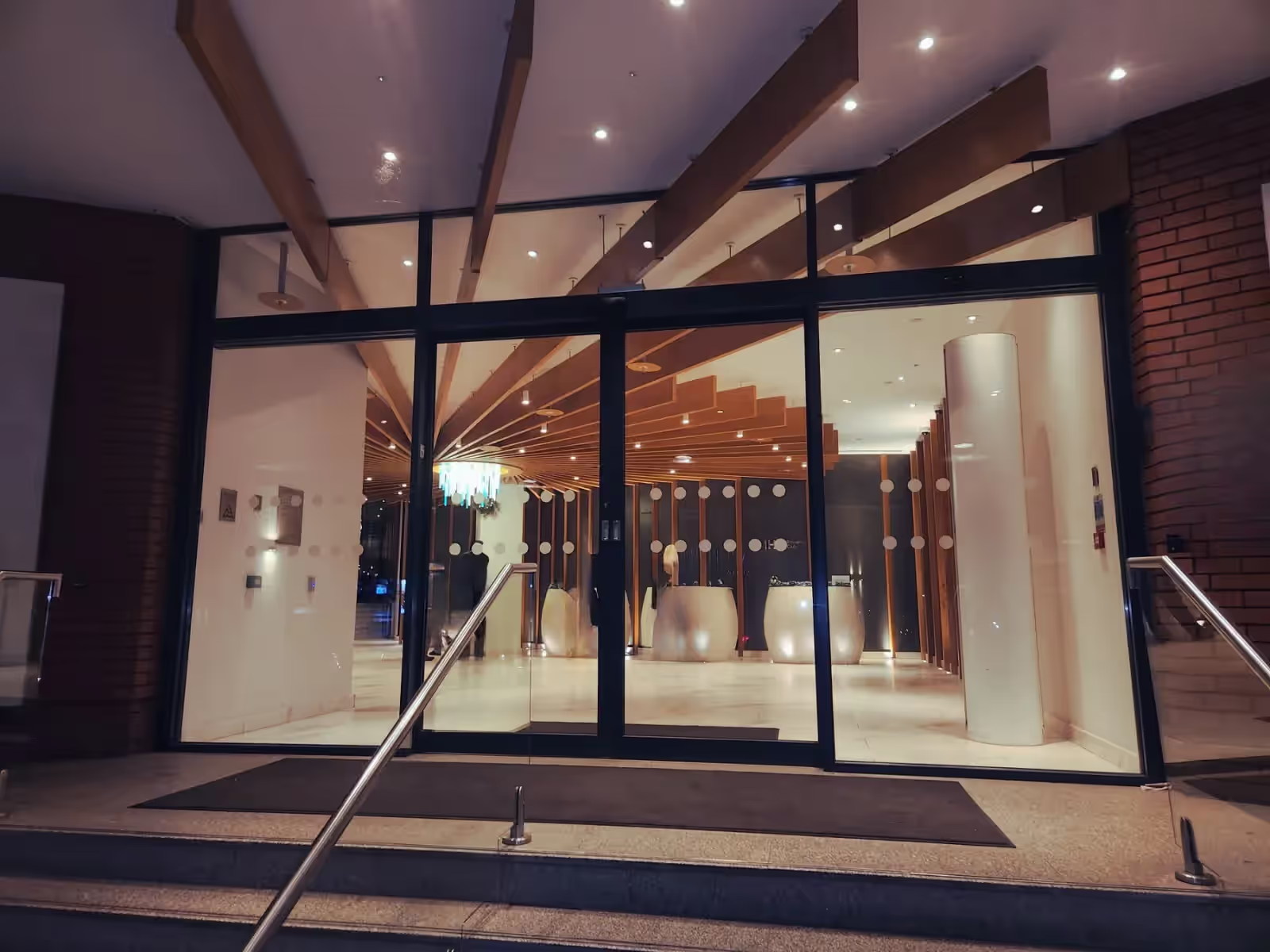
Revolving door support
Plan a lobby that holds its temperature
We survey the frontage, specify the drum and its accessible pass door together, and support the installation with planned maintenance and reactive repair after handover.
- Support scope
- Survey-led specification
- Accessible pass door included in scope
- EN 16005 testing at handover
- Repairs for existing installations
Coverage
Revolving door services by area
Explore more