
Industrial Doors
Fire Shutters
Fire-rated roller shutters that hold the compartment line, supplied, installed, alarm-interfaced, tested and maintained.
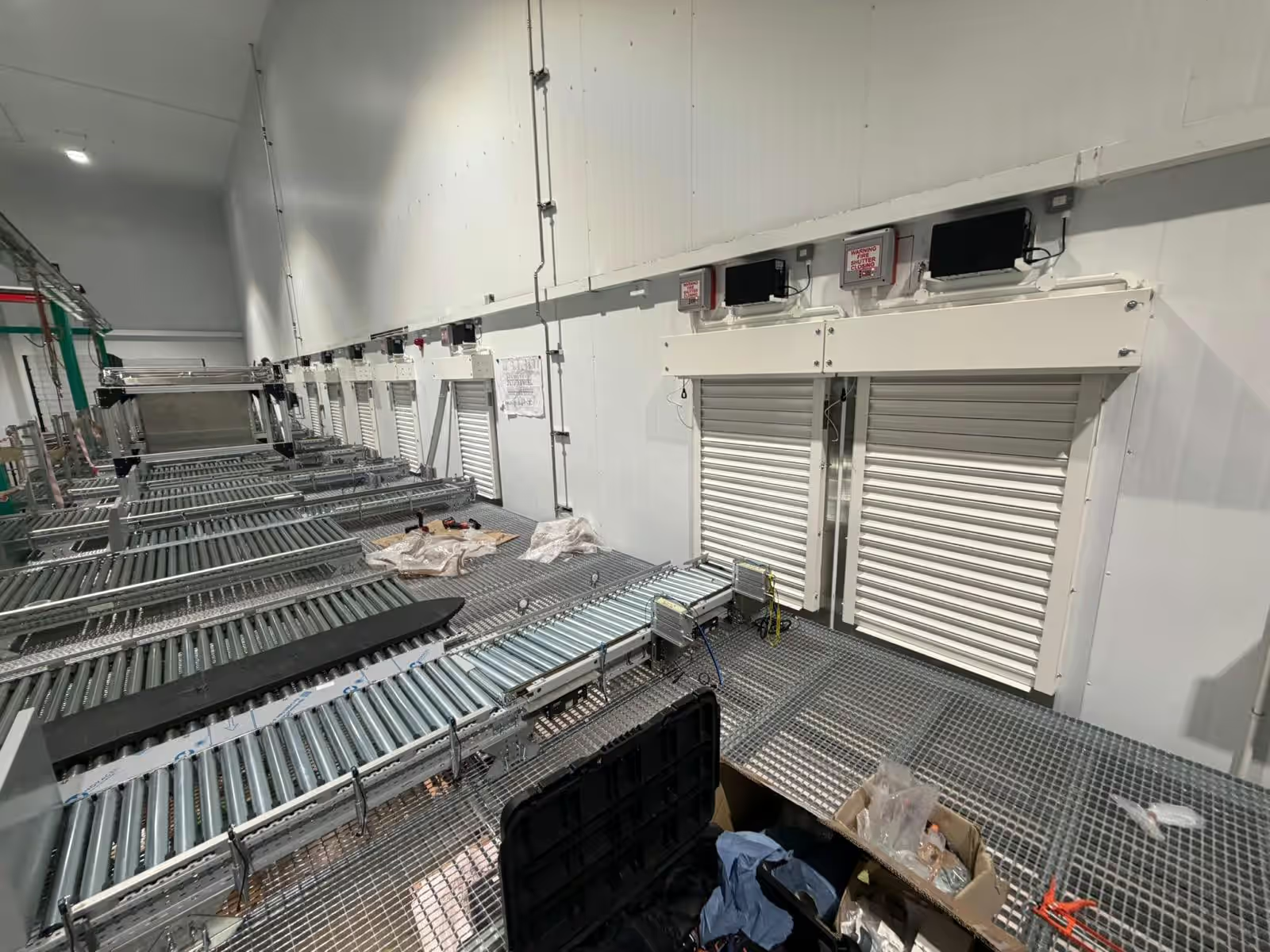
Fire shutters
Compartmentation for openings that work for a living
A fire shutter is part of the building's fire strategy, not just another door: it holds a compartment line closed against fire, typically for 60, 120 or 240 minutes, sealing openings that have to stay open for daily production. Counters, serveries, conveyor pass-throughs and internal openings all rely on them. Avanti Doors supplies, installs, tests and maintains fire-rated roller shutters across the UK from our Norfolk base, interfaced to the fire-alarm system and commissioned with the documentation the responsible person needs.
Where they fit
Counters, conveyors and compartment lines
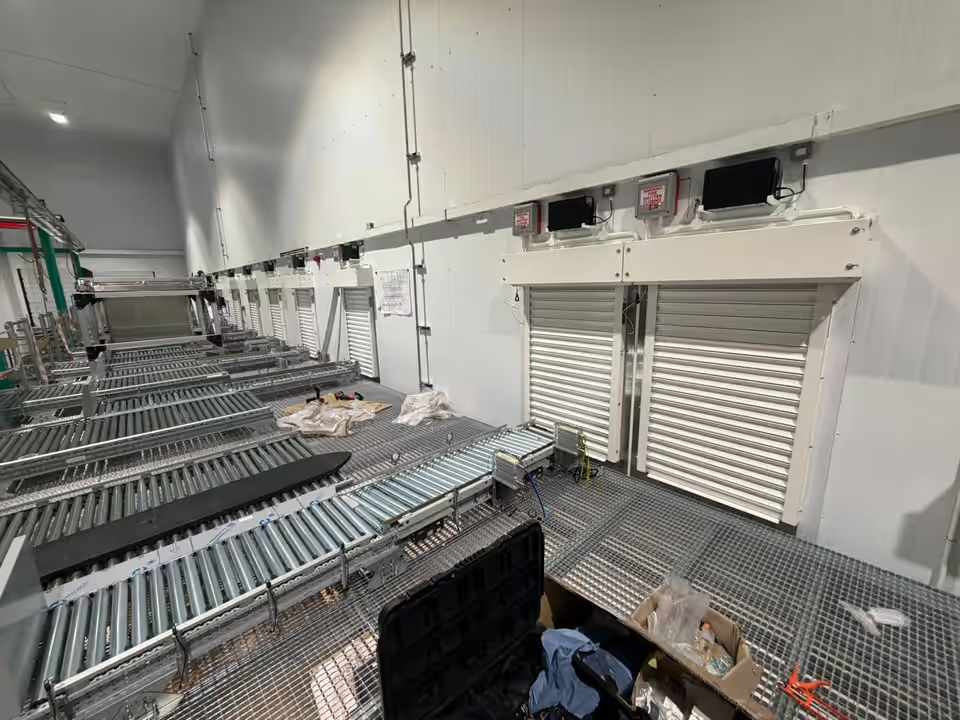
Fire shutters live where the fire strategy and the day's work collide: the servery between a kitchen and a dining hall, the conveyor pass-through between production and despatch, the parts hatch in a workshop wall. By day the opening earns its keep; on an alarm signal the shutter closes it to a tested fire rating, holding smoke and fire on one side while people leave from the other.
Our reference installation is the distribution facility at Alconbury: 60-minute fire-rated shutters over live conveyor lines, each with a solid-lath curtain, safety brake, battery backup and a fire-alarm interface running a programmed closing delay with automatic reset, engineered so the compartment line closes reliably without trapping product or endangering staff, and commissioned with the test documentation for the building's fire log. The same discipline applies at every scale, from a single counter shutter to a full production hall.
Before specification
What the fire-shutter survey establishes
The rating comes from the fire strategy; the survey makes sure the shutter, its interface and its fail-safe behaviour actually deliver it.
Fire rating and evidence
The rating (60/120/240 minutes) comes from the fire strategy; the shutter must carry test evidence to EN 1634-1 and CE/UKCA marking to EN 16034 for the size and configuration actually installed.
Release and alarm interface
How the shutter closes matters. Where it crosses an escape route, Approved Document B says it should release on heat only, such as a fusible link or heat detector, not on the fire alarm. Elsewhere, alarm-linked closure with a programmed delay, controlled descent, audible warning and auto-reset is configured to the evacuation strategy, following BS 7273-6.
People below the curtain
Where a shutter can close over an occupied route, the descent arrangement and warning provisions are designed so the closing curtain never traps or strikes anyone.
Power and fail-safe
Fire shutters must work when the building doesn't: gravity fail-safe descent, battery backup and the behaviour on mains failure are specified and proven at commissioning.
Common questions
Fire shutter FAQs
Quick answers for responsible persons, facilities managers and fire risk assessors.
1Where are fire shutters required?
Wherever an opening breaks a fire-compartment line that the fire strategy needs held: kitchen serveries and counters, conveyor and process pass-throughs between compartments, plant-room openings and internal windows. The fire risk assessment and strategy identify the lines; the shutter is how an operational opening stays on the right side of them.
2What standards do fire shutters need to meet?
Fire resistance is demonstrated by testing to EN 1634-1, and shutters supplied for fire compartmentation carry CE/UKCA marking to EN 16034 alongside the industrial-door product standard EN 13241. The installation also has to implement the alarm interface and fail-safe behaviour correctly, a certified shutter fitted or configured wrongly does not deliver its rating.
3How often should fire shutters be tested and serviced?
The law sets no fixed interval: Article 17 of the Fire Safety Order requires a suitable system of maintenance. HM Government's example fire safety checklist suggests a monthly check that compartment shutters work and a six-monthly test of their release and closing mechanisms by a competent person, with every test recorded in the fire log. Demanding environments may need more, and our fire shutter drop test guide covers what the test involves.
4Can you give a real example of a fire-shutter installation?
At a distribution facility in Alconbury, Cambridgeshire, we installed 60-minute fire-rated shutters over live conveyor lines, each with tubular motor, solid lath curtain, safety brake, battery backup and a fire-alarm interface with a programmed closing delay and automatic reset, so the compartment line closes without trapping product or people. The full scope is on the project page.
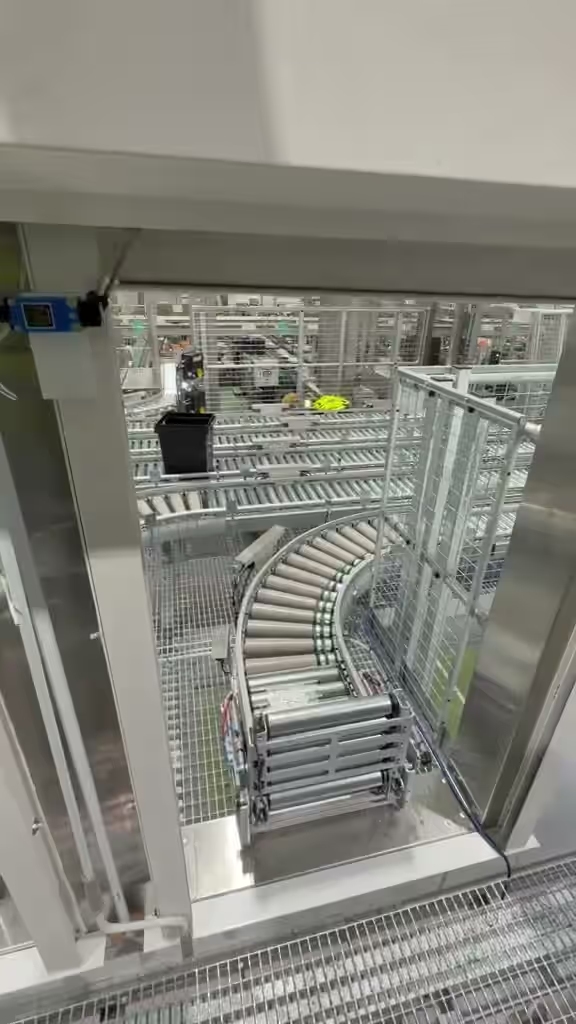
Fire shutter support
Prove the compartment line will hold
From new alarm-interfaced installations to scheduled drop-testing of existing shutters, we keep fire shutters compliant, documented and working, because this is the one door that must not fail.
- Support scope
- EN 1634-1 tested, EN 16034 marked equipment
- Fire-alarm interface and fail-safe commissioning
- Scheduled drop tests with written records
- Repairs for existing fire shutters
Documented work
Recent fire-shutter projects
These project pages describe the actual equipment, site and work completed.
Explore more