Industrial Doors
High-Speed Doors
Rapid-action doors that keep busy routes moving while the building stays sealed, supplied, installed, serviced and repaired.
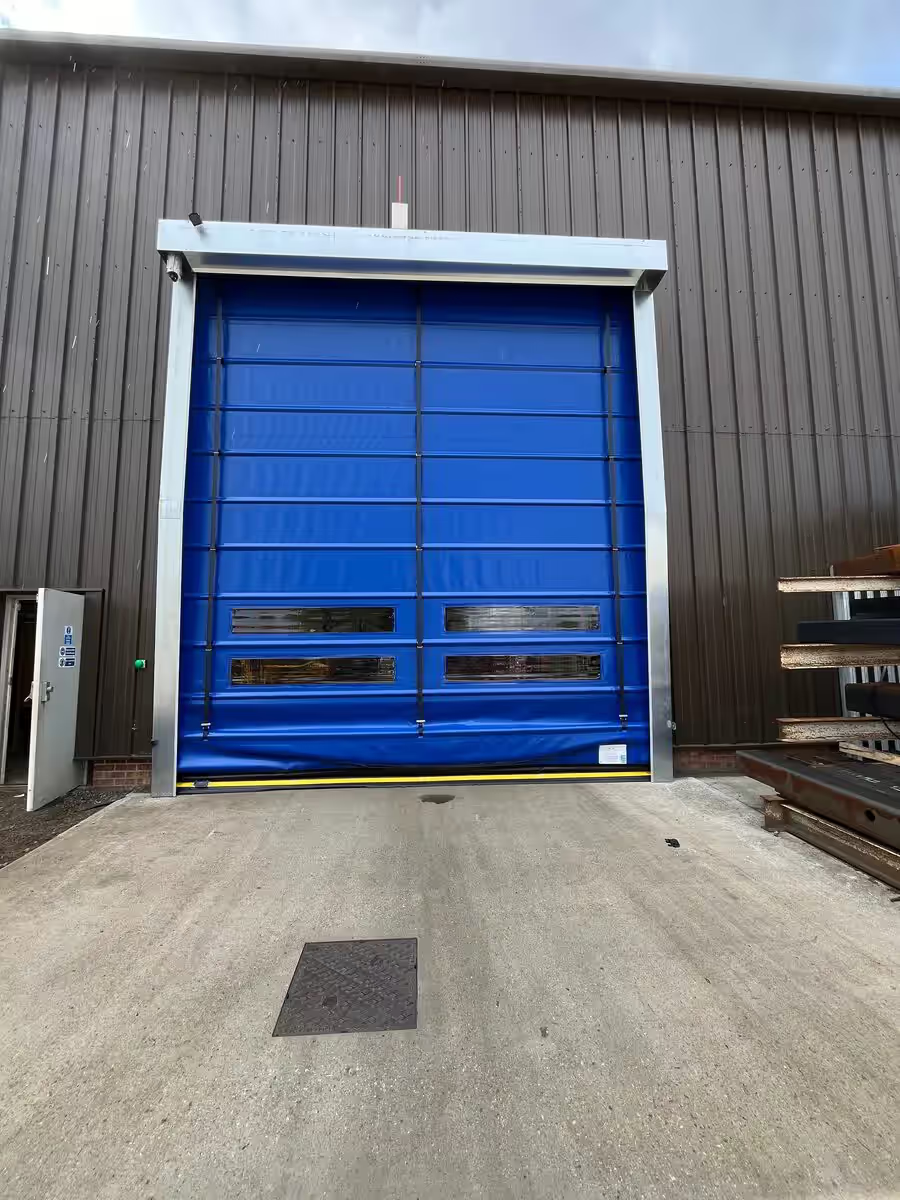
High-speed doors
Open for seconds, closed by default
On a route that forklifts cross two hundred times a shift, an ordinary door is either left open, losing heat and letting in dust and pests, or it becomes the bottleneck everyone queues behind. High speed doors solve both: opening at metres per second, closing automatically behind every movement, and taking the knocks of a busy route without stopping the operation. Avanti Doors supplies, installs, services and repairs rapid-action fabric and rigid high speed doors from King's Lynn across Norfolk, East Anglia, London and the wider UK.
Where they fit
Traffic routes, cold stores and clean environments
The classic installations are the internal route between a warehouse and a chilled store, the production-area doorway that has to hold a hygiene regime, and the busy external opening where the choice was previously "door open all day" or "queue at the door". Because a rapid-action door is only open for the seconds a movement actually needs, the temperature difference across it survives, energy bills drop, and pests, dust and draughts stay outside.
Most of the fleet is fabric-curtain roll doors, light, fast and available self-repairing, with rigid spiral and insulated variants where security or external exposure demands it. Activation is half the design: loops and radar that see forklifts but not passers-by, interlocks for airlocks between zones, and light curtains protecting the opening to the safety standard powered doors require. Where the same opening also needs overnight security or insulation, we pair the high-speed door with a roller shutter or sectional door in the same structural opening.
That pairing is how industrial sites we already work tend to run. The fire shutters over the conveyor lines at Alconbury are one documented industrial job on a distribution route. High speed door installation, service and repair from King's Lynn covers the same kind of warehouse and logistics traffic across Norfolk, East Anglia, London and the wider UK.
What we install
High speed door types
The survey picks the curtain from cycle count, exposure and what happens when a forklift hits it.
Fabric roll doors
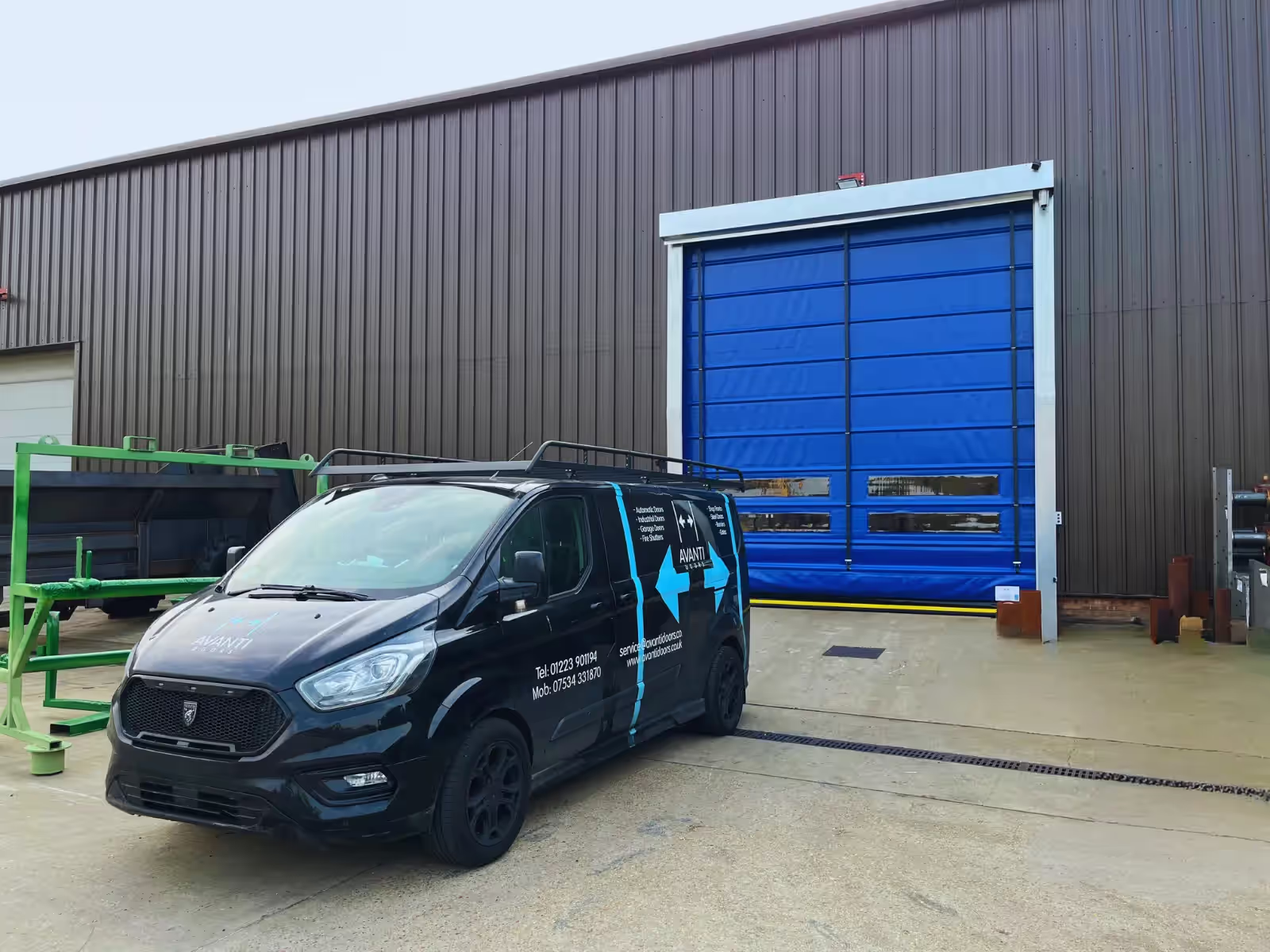
Light, fast curtains, often self-repairing after a forklift knock. The usual choice on internal traffic routes and chilled stores.
Rigid spiral doors
Insulated rigid slats for external openings where wind, security or temperature matter more than a self-repairing curtain.
Before specification
What the high-speed-door survey establishes
Cycle count, exposure, activation and recovery behaviour are recorded before a curtain or drive is proposed.
Cycle rate and speed
Daily openings, traffic type and acceptable waiting time set the drive and curtain specification, a door crossed 500 times a day is engineered differently from one crossed 50.
Internal or external
External doors need wind-rated curtains, reinforcement and weather sealing; internal partition doors can prioritise speed, visibility panels and hygiene finishes.
Activation
Induction loops, radar, pull cords, remotes and interlocks are chosen around who and what crosses the opening, and how to keep pedestrians and vehicles apart.
Impact recovery
Self-repairing curtains that re-feed into their guides after a knock keep busy routes running; on harder-working routes they pay for themselves in avoided call-outs.
Temperature and hygiene
Chilled stores, food production and clean rooms need a curtain and seals that hold the temperature line and can be cleaned. Cycle rate still decides the drive.
Common questions
High-speed door FAQs
Quick answers for operations teams sizing up rapid-action doors.
1Where do high-speed doors make the most difference?
Temperature-controlled and hygiene-critical buildings, cold stores, food production, pharma, and any busy internal route between zones. They also earn their keep on external openings with heavy traffic, where a conventional door would either stand open all day or wear out from constant cycling.
2What happens when a forklift hits one?
With a self-repairing fabric door, usually nothing that stops the shift: the curtain breaks away from its guides on impact and re-feeds itself on the next cycle. Rigid and non-self-repairing doors are specified where security or wind rating matters more, accepting that an impact means a repair visit.
3Can a high-speed door work alongside our existing shutter or sectional door?
Yes, a common arrangement is a security shutter or insulated sectional door for overnight lock-up with a high-speed door handling the daytime traffic in the same opening. Each door does the job it is best at, and the survey confirms the structure can carry both.
4What maintenance do high-speed doors need?
They work hard, so planned maintenance matters more than on most doors: curtain and guide condition, drive and brake, balance, photocells, light curtains and activation devices are inspected and adjusted on a schedule matched to the cycle count, with records kept for the site file.
5Do you install high speed doors in Norfolk and East Anglia?
Yes. High speed door installation, service and repair is part of the industrial-door work from the King's Lynn base, covering Norfolk, the rest of East Anglia, London and the wider UK. A survey records cycle count, exposure and activation before a curtain or drive is quoted.
High-speed door support
Take the bottleneck out of the doorway
Tell us the route, the traffic and the temperature either side of the opening, we will specify a door that keeps pace with the operation and maintain it around your shifts.
- Support scope
- Survey-led curtain and drive specification
- Self-repairing options for busy routes
- Activation designed around real traffic
- Cycle-based planned maintenance
Related industrial work
Industrial sites where traffic and lock-up already sit together
These are not high-speed door case studies. They are the kind of industrial openings where a rapid-action door is specified alongside a shutter or fire curtain.
Coverage
High speed door services by area
Explore more