
Industrial Doors
Sectional Overhead Doors
Insulated panelled doors that rise vertically and seal the building, supplied, installed, serviced and repaired for industrial and commercial sites.
Sectional overhead doors
The insulated industrial door
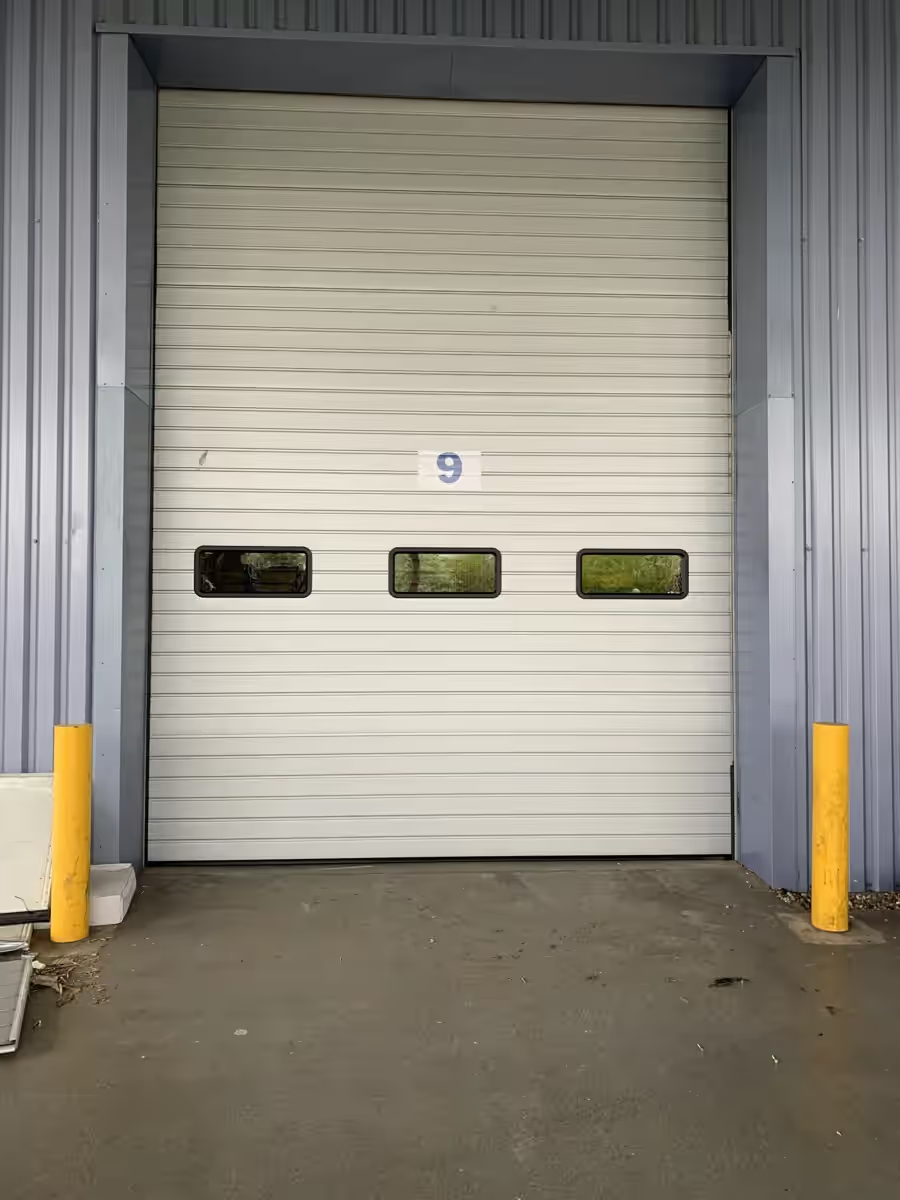
A sectional overhead door closes the opening with hinged, insulated panels that rise vertically and travel back under the roof on tracks. Nothing swings out, the full width and height of the opening stay usable, and the panel construction seals and insulates far better than a single-skin curtain, which is why heated warehouses, food operations and busy loading bays specify sectional doors. Avanti Doors supplies, installs, services and repairs sectional overhead doors across the UK from our Norfolk base.
Where they fit
Loading bays, workshops and temperature-controlled buildings
Sectional doors are the standard choice for loading bays on heated or chilled buildings, vehicle workshops, fire stations and any industrial opening where the door is part of the building's thermal envelope rather than just its security. The panels travel up and back on tracks, so the door works with dock shelters and levellers, keeps the full drive-through height, and presents a flat, sealed face to the weather when closed.
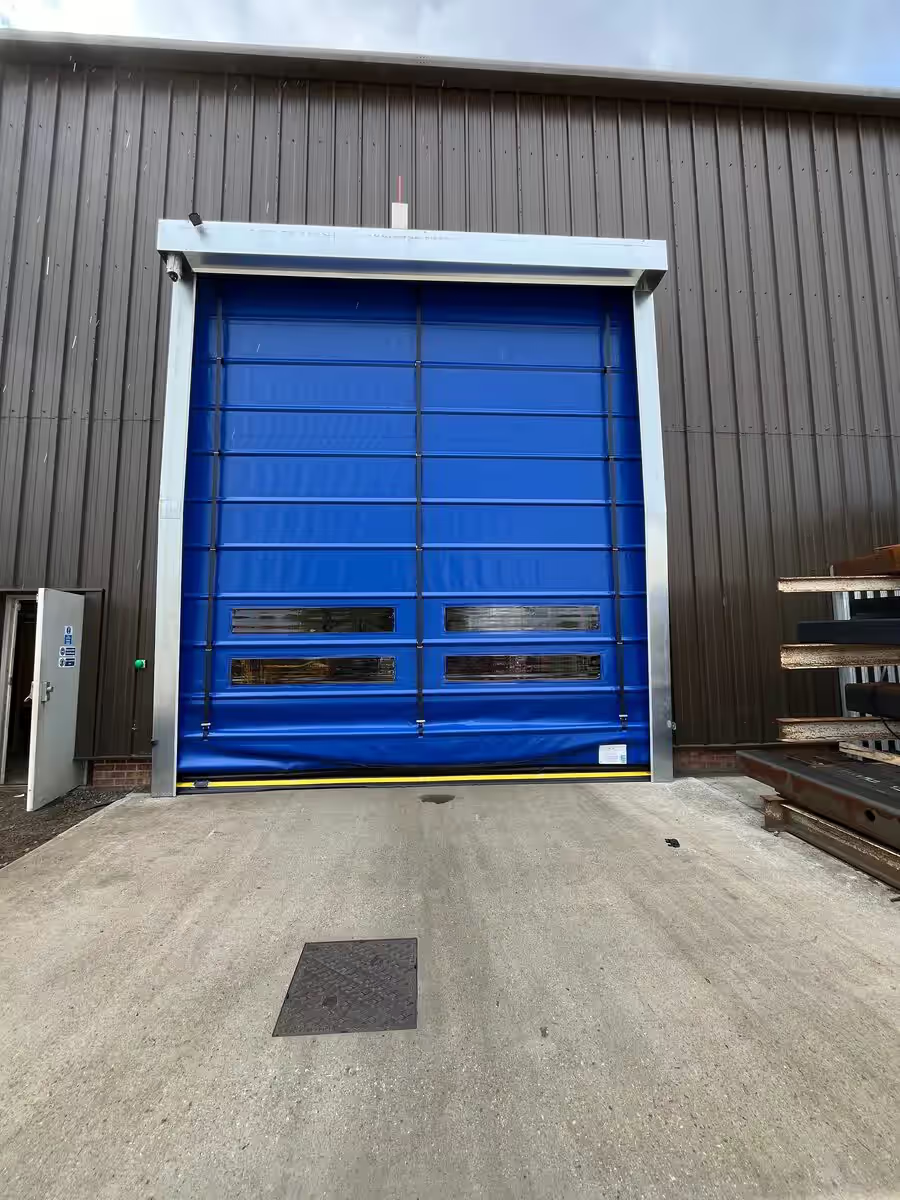
The engineering that matters is mostly invisible: track geometry chosen from the structure above the opening, torsion springs balanced to the panel weight, and seals that actually meet the floor and frame. Getting those right is what separates a door that runs quietly for years from one that eats springs and cables, and it is why we survey before we quote, the same approach set out in our loading-bay door specification guide. Where a bay needs speed as well as sealing, a sectional door often pairs with a high-speed door inside the same opening.
Before specification
What the sectional-door survey establishes
Track, panels, balance and sealing are one system, the survey records the structure and the operation before equipment is proposed.
Track layout
Standard lift, low-headroom, high-lift or vertical-lift track configurations are chosen from the structure above the opening, the door adapts to the building, not the other way round.
Panel and insulation
Twin-skinned foam-filled panels, glazed vision sections and pedestrian wicket doors are specified around temperature control, light and how people move through the opening.
Balance and drive
Torsion-spring balancing, manual chain or electric operation and control positions are matched to the door weight and the site's daily cycle count.
Sealing
Perimeter, threshold and inter-panel seals decide how well the door holds temperature and keeps weather, dust and pests out, often the whole reason a sectional door was chosen.
Common questions
Sectional overhead door FAQs
Quick answers for facilities and operations teams weighing sectional doors against shutters.
1Sectional door or roller shutter, which should we choose?
Choose sectional where insulation, sealing and appearance matter: heated or chilled buildings, food and pharma operations, and workshops where people work near the opening. Choose a roller shutter where security and simplicity at minimum headroom cost win. The deciding facts are usually the building's temperature regime and the structure available above and beside the opening, both are recorded at survey.
2How insulated are sectional overhead doors?
Typical twin-skinned panels are foam-filled sections around 40mm thick, and with good perimeter sealing a sectional door outperforms a single-skin roller curtain by a wide margin. For cold stores and temperature-controlled bays the panel build-up and seals are specified to the target temperature difference.
3Can a sectional door have a pedestrian door or windows in it?
Yes, glazed vision panels are common where forklifts and pedestrians share the area, and a wicket (pass) door built into the leaf saves opening the full door for foot traffic. Both are specified at survey because they affect panel strength, balance and the safety package.
4Do you repair existing sectional doors?
Yes, snapped torsion springs, worn cables, damaged panels, bent tracks and failed operators are routine repairs. Springs and cables are under significant tension and are not a DIY job; they are replaced with the door properly restrained and rebalanced.
Sectional door support
Seal the bay without slowing it down
We specify, install and maintain sectional overhead doors around the site's structure, temperature regime and daily traffic, and repair the springs, cables, panels and operators that wear.
- Support scope
- Survey-led track and panel specification
- Insulated, glazed and wicket options
- Spring and cable repairs done safely
- Planned maintenance with records
Explore more